



VAR (Video Assistant Referee) Systems: Precision Under Pressure

The introduction of Video Assistant Referee (VAR) systems marked a pivotal moment in football history, forever changing how the game is officiated. First used in a live match in August 2016 during a United Soccer League game in the US, and later adopted globally for the 2018 FIFA World Cup, VAR brought the precision of computer engineering directly into the referee’s decision-making process. It was no longer just about the human eye on the pitch; it was about leveraging technology to ensure the biggest calls were cut correctly.
The main problem VAR was designed to solve was the “clear and obvious error” made by on-field match officials in four game-changing situations: goals, penalty decisions, direct red cards, and cases of mistaken identity. Before VAR, a single split-second misjudgment by a referee—a missed offside leading to a goal, or a dive resulting in a penalty—could decide a championship and cost teams millions. The human element, while part of the game’s charm, was also its greatest source of controversial and often incorrect outcomes in high-stakes moments.
By integrating a network of high-definition cameras with a centralized video operation room, VAR makes the sporting world better by adding a layer of objective scrutiny to match-defining incidents. A dedicated team of video assistant referees can replay angles, slow down footage, and communicate with the on-field referee in real-time, allowing for corrections that were previously impossible. This leads to a fairer competition where outcomes are more likely to be decided by skill and strategy rather than by an officiating mistake. It protects the integrity of the game and reduces the sense of injustice for players and fans alike.
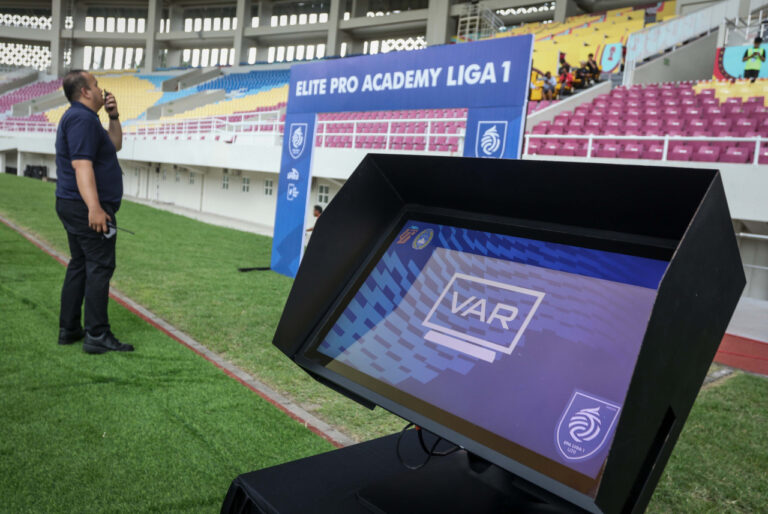
From a computer engineering perspective, a VAR system is a massive, synchronized Internet of Things (IoT) implementation fused with real-time Artificial Intelligence (AI). Think of the stadium as a giant “smart home,” but instead of a few security cameras, there are over 30 broadcast-quality 4K cameras acting as high-precision sensors. Just as your smart doorbell instantly sends video to your phone when it detects motion, these cameras stream terabytes of data per match through a dedicated fiber-optic network—imagine a home internet connection on steroids—to a central server. This is where AI computer vision takes over. Similar to how your smartphone’s photo gallery automatically recognizes and tags faces, the VAR’s AI algorithms track up to 29 data points on each player’s body (limbs, head, torso) 50 times per second, creating a live, 3D digital model of the game. When an offside call is needed, the system doesn’t just draw a 2D line on a screen; it uses this 3D model to virtually slice the pitch with perfect geometric accuracy, knowing the exact position of a striker’s toe relative to a defender’s shoulder, a calculation no human eye could make in real-time. The proof of VAR’s impact is in the data. Since its widespread adoption, the accuracy of key match decisions has significantly increased. According to FIFA’s analysis after the 2018 World Cup, the accuracy rate of match-changing decisions rose from 95% to 99.3% thanks to VAR intervention. Furthermore, data from various leagues shows a marked decrease in the number of goals allowed from offside positions, with the technology providing definitive proof. While still debated for its impact on game flow, the tangible improvement in decision-making accuracy is undeniable.

Comments :