



Ready? Get Set. Time! with our Brand New Smartwatch
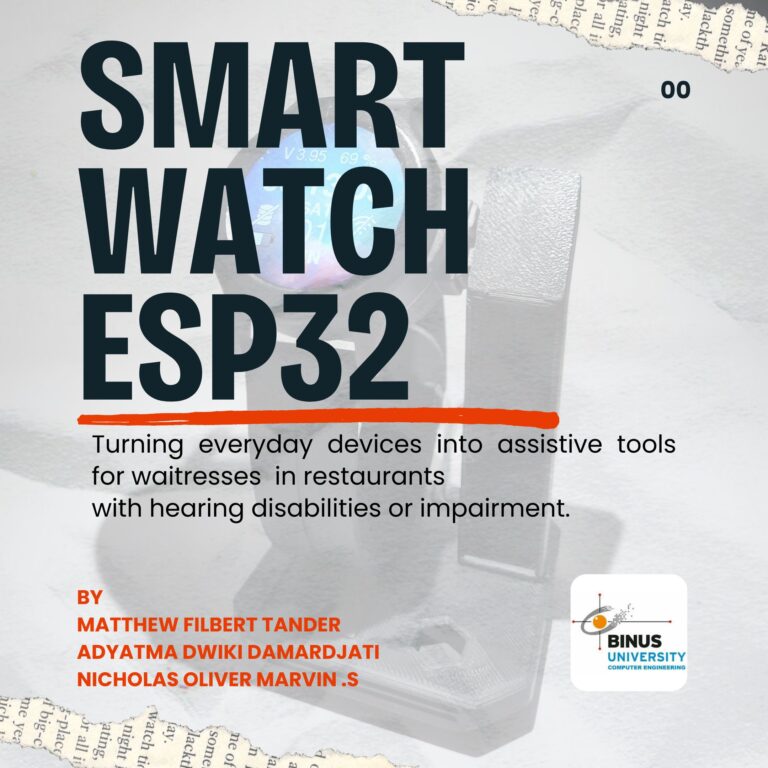 In 2025, a student team developed a prototype wearable device in the form of a smartwatch, utilizing an ESP32 microcontroller. Smartwatches are commonly used in daily life for functions such as receiving notifications, tracking activity, viewing alerts, and providing quick access to important information directly on the wrist. Building on this familiar and practical form factor, the project adapts the smartwatch into an assistive device that helps individuals with hearing impairments receive real-time service notifications while working in a restaurant environment.
The project investigates how assistive technologies can help individuals with hearing impairments perform their duties more effectively in restaurant settings. As part of this research, the team designed an integrated system composed of a web-based ordering interface, a local database, and a wearable notification device.
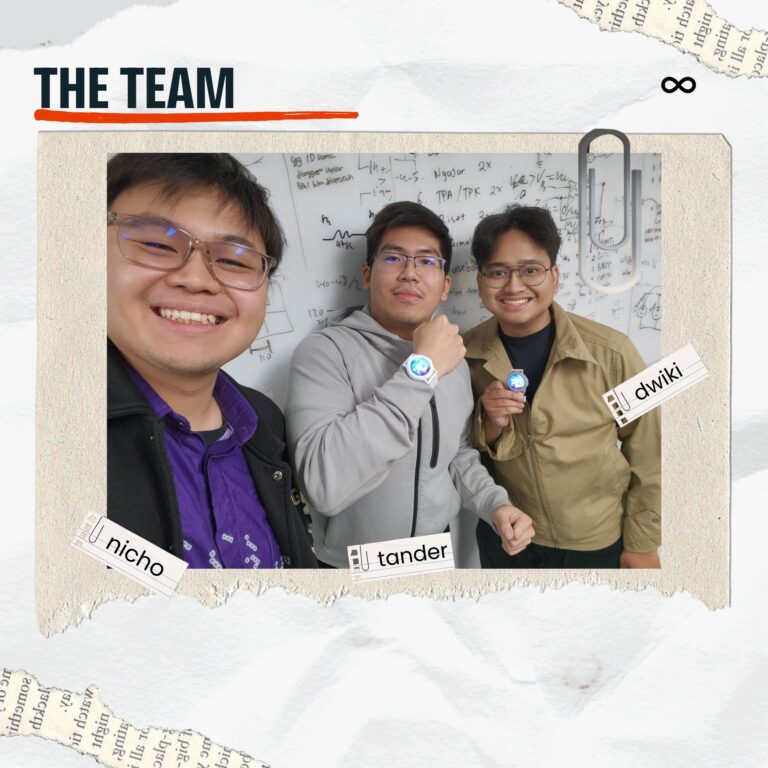
The project was carried out by B25 Computer Engineering students:
- Matthew Filbert Tander
- Adyatma Dwiki Damardjati
- Nicholas Oliver Marvin Susetya
In Indonesia, an estimated 1 in every 250 individuals has a hearing disability, while only 18.7% of persons with disabilities participate in the workforce. These figures underscore the need for more inclusive employment practices. The Food and Beverage (F&B) industry is one sector with strong potential for employing individuals with hearing impairments, particularly in roles such as restaurant waitstaff where work processes can be adapted to reduce communication barriers.
The system proposed in this project aims to address these challenges by implementing a digital, website-based ordering mechanism that reduces dependence on verbal communication. The solution functions as a complete restaurant workflow system, consisting of a web ordering interface for customers, a local database for managing orders, a wearable smartwatch device for notifying waitstaff, and a kitchen computer interface where incoming orders are displayed for food preparation. Through this integrated arrangement, communication between customers, waitstaff, and kitchen staff becomes more streamlined, allowing employees with hearing impairments to perform their roles more comfortably and efficiently.
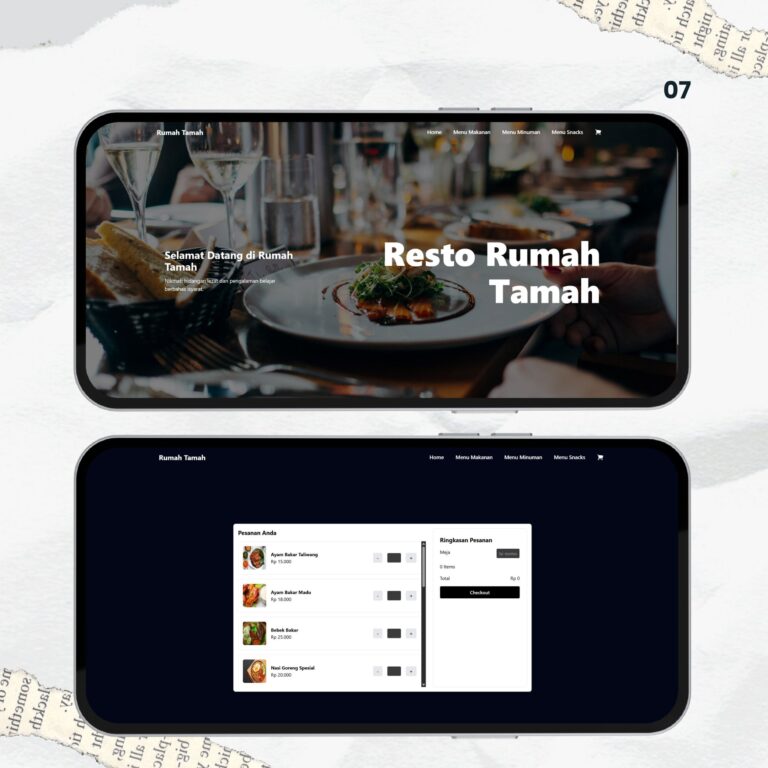
The menu-ordering system is a web-based application built using Golang, allowing anyone inside the restaurant to access it easily through their smartphone. Because it runs directly in a browser, customers do not need to install any additional apps. The entire system is hosted on a local server, ensuring that orders can still be placed even without an internet connection. Additionally, the restaurant does not need to install extra hardware or add-on equipment to support the website and database—only a simple computer for the kitchen and the local server are required to operate the system effectively.
 With the wearable device designed in the form of a smartwatch, users can easily adapt to it thanks to its familiar watch-like appearance. Tasks appear directly on the full-color TFT display, where each task is represented with its own color and text label. This makes it easy for waitresses to quickly understand and respond to the type of task. The waitress can accept or reject tasks directly from the watch if needed.
The device is built around an ESP32-based microcontroller, which is low-power yet powerful, giving it long battery life, flexible development options, and lower manufacturing costs. The casing is made from 3D-printed filament resin, making it waterproof, durable, and easy to mass-produce.
For charging and straps, the design uses components that are already widely available on the market—such as Huawei Band-style magnetic chargers and standard 22 mm strap mechanisms like those used by Xiaomi—making the device easy to replace, repair, and manufacture efficiently.
Locked in, clocked in. Cheers.

Comments :