



Injury Prediction Algorithms: The Crystal Ball of Sports Medicine

Injury prediction algorithms represent the intersection of big data, machine learning, and sports science. While teams have always tried to prevent injuries, the use of sophisticated, predictive modeling began to gain serious traction around 2015-2017, driven by the explosion of data collected from wearable devices and medical records. This is computer engineering applied to the most valuable asset in football: the players’ health.
The main problem these algorithms solve is the high rate of preventable, non-contact, soft-tissue injuries (like hamstring strains) in professional football. These injuries cost clubs millions in wages for unavailable players and can derail an entire season. Traditionally, injury risk was assessed based on simple factors like past injury history or coach intuition. This approach failed to account for the complex interplay of variables like cumulative workload, sleep quality, muscle imbalances, and training intensity that often precede an injury.
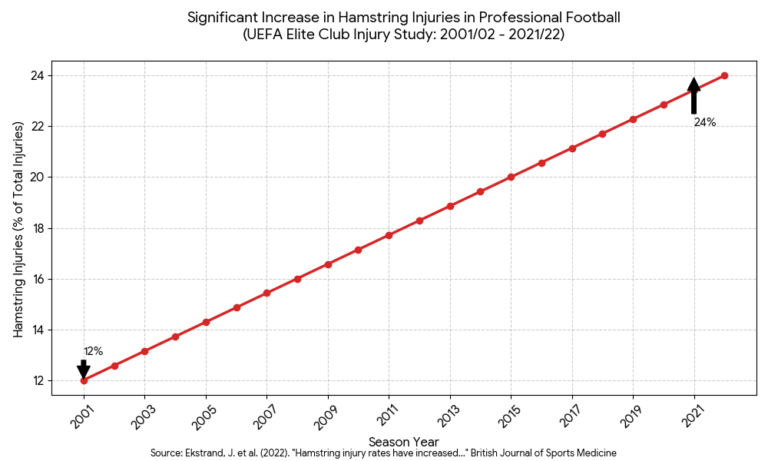
The graph below visualizes the data from a major longitudinal study showing a significant increase in specific injury types. While some studies suggest overall injury rates have remained stable or slightly decreased due to better medical care, specific high-intensity injuries have significantly increased. The most prominent research on this topic comes from the UEFA Elite Club Injury Study.
-
The Paper: Hamstring injury rates have increased during recent seasons and now constitute 24% of all injuries in men’s professional football: the UEFA Elite Club Injury Study from 2001/02 to 2021/22.
-
Authors: Ekstrand J, Bengtsson H, Waldén M, et al.
-
Journal: British Journal of Sports Medicine (2022).
Key Findings for Visual Analytics:
-
The “Doubling” Effect: The proportion of hamstring injuries has doubled from 12% (in 2001) to 24% (in 2022) of all total injuries.
-
Intensity Factor: This increase is largely attributed to the modern game’s demand for high-speed sprinting and fixture congestion, which places higher mechanical load on players despite advancements in physiotherapy.
-
Post-COVID Spike: Separate data also indicates a sharp spike in muscle and skeletal injuries (up to 120% increase in some categories) during the condensed post-COVID seasons.
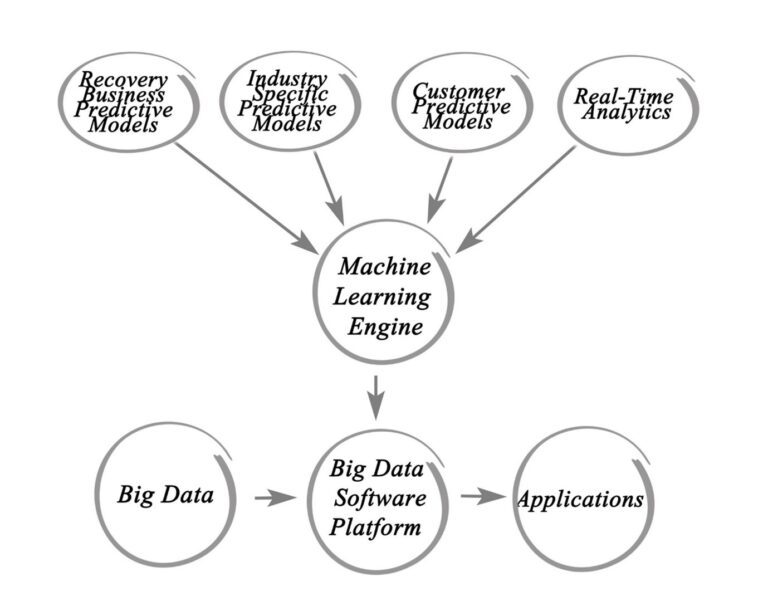
Injury prediction algorithms make the sporting world better by moving from a reactive to a proactive model of player care. By feeding vast amounts of data—from GPS metrics (distance, sprints, acceleration) and biometric data (heart rate variability) to subjective wellness questionnaires—into machine learning models, these systems can identify subtle patterns and correlations that indicate a player is at a high risk of injury. This allows medical and coaching staff to intervene early, adjusting a player’s training load, prescribing specific recovery protocols, or resting them from a match before an injury occurs.
The proof of their effectiveness is becoming increasingly clear. Clubs that have successfully implemented these data-driven strategies have reported tangible reductions in injury rates. For example, some studies and club reports have shown a reduction in muscle injuries by 20% to 40% after adopting rigorous load management based on predictive data. While no algorithm can predict every injury (especially contact ones), the data provides a powerful risk-management tool that keeps more best players on the pitch for more games.

Comments :