



Ticketing & Access Control: The Fortress Gate
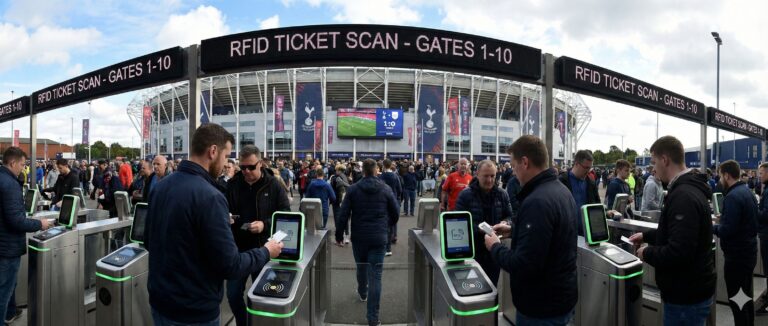
The revolution in stadium access control, driven by computer engineering, has moved us from paper tickets and turnstiles to secure, digital, and biometric systems. The widespread shift towards fully digital, mobile-first ticketing gained immense momentum in the late 2010s, accelerated further by the contactless needs of the post-pandemic era. This is the front line of stadium security and fan experience.
The main problem these systems solve is the inefficiency, insecurity, and fraud associated with traditional paper ticketing. Paper tickets are easily lost, stolen, or counterfeited, leading to a black market and security risks. Physically checking tens of thousands of paper tickets is slow, creating massive queues at stadium entrances. Furthermore, once a paper ticket is sold, the club often has zero data on who is actually entering their stadium.

Modern ticketing and access control make the sporting world better by enhancing security, efficiency, and data collection. By using Near Field Communication (NFC) on smartphones, encrypted dynamic barcodes that change every few seconds, or even facial recognition, stadiums can ensure that only valid ticket holders enter. This virtually eliminates ticket fraud. These systems also speed up ingress significantly, processing thousands of fans per hour through automated gates.
The tangible proof is in the smooth, secure operation of modern matchdays. Stadiums can now monitor ingress in real-time, seeing exactly how many fans are inside at any given moment. The data is powerful: a club knows that “Fan John Doe, aged 25, entered via Gate D at 14:05.” This data is crucial for security purposes (banning troublemakers) and also allows clubs to build detailed profiles of their fanbase for personalized marketing and engagement, moving from knowing just the ticket buyer to knowing every single attendee.

Comments :