



Digital Twin Stadiums: The Virtual Venue
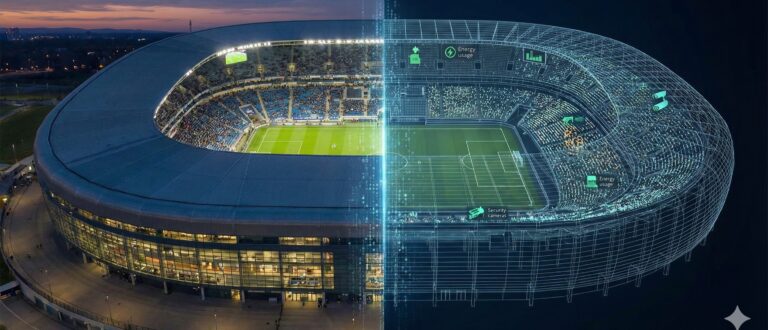
The concept of a “Digital Twin” is a cutting-edge application of computer engineering in stadium management, emerging in the early 2020s for the world’s most modern venues. A digital twin is a dynamic, virtual replica of the entire physical stadium, created using data from thousands of IoT (Internet of Things) sensors embedded throughout the structure, from the turnstiles to the roof trusses.
The main problem a digital twin solves is the immense complexity and inefficiency of managing a massive, multi-use facility like a modern football stadium. Managing crowd flow, energy consumption, security, and maintenance for a venue that holds 60,000+ people is a logistical nightmare. Traditional facility management relies on siloed systems and reactive responses to problems (e.g., fixing something only after it breaks), leading to higher costs, safety risks, and a suboptimal fan experience.
A digital twin makes the sporting world better by providing a single, holistic, real-time view of the stadium’s operations. Venue managers can simulate crowd scenarios to optimize entry and exit routes, monitor energy usage in real-time to reduce carbon footprints and costs, and predict structural maintenance needs before a failure occurs. For security, it can integrate CCTV and sensor data to identify overcrowding or incidents instantly. It turns stadium management from a reactive task into a predictive, data-driven science.
The proof of its value is seen in the operational efficiency of new stadiums. For instance, a digital twin can help reduce energy costs by an estimated 15-20% by optimizing HVAC and lighting systems based on real-time occupancy data. It can also improve safety by simulating emergency evacuations to ensure the fastest possible exit times for tens of thousands of people. The data is tangible: managers can see that “Gate C is at 85% capacity” and preemptively redirect fans to another entrance, ensuring a smoother, safer matchday experience.

Comments :