



The World Cup Through the Referee’s Eyes: How Technology Reshaped Decisions—and Billions in Betting Exposure
 |
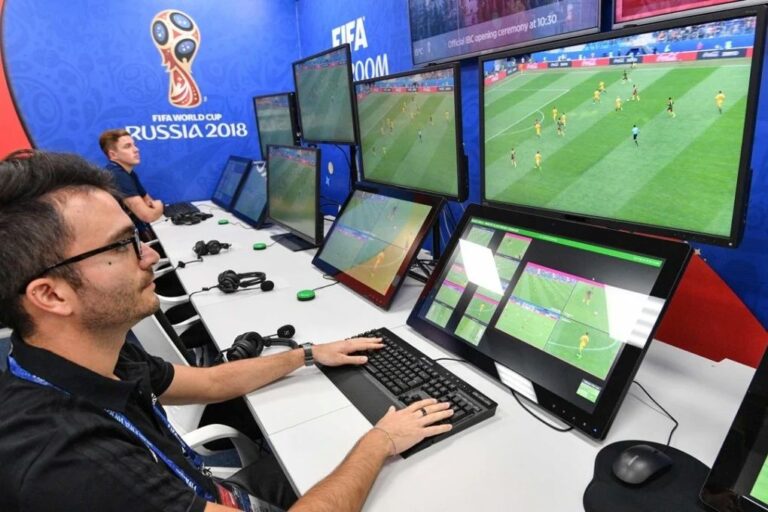 |
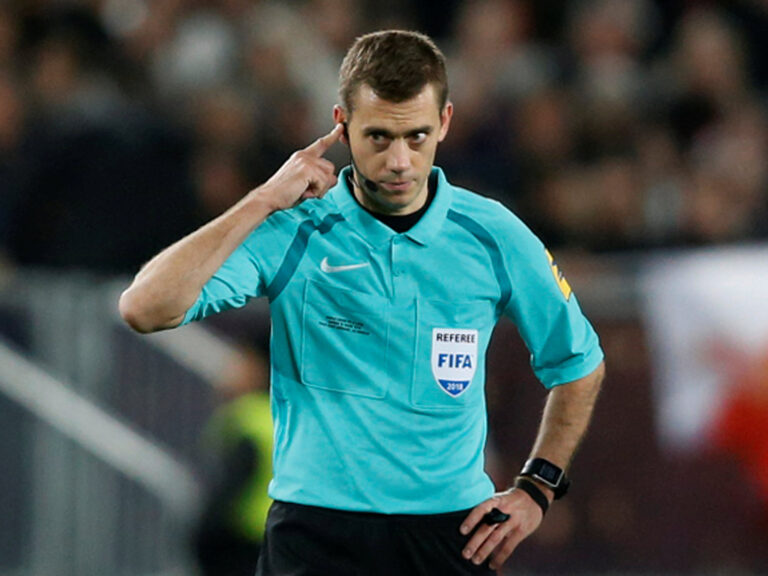
The FIFA World Cup 2026 was not only the largest World Cup ever staged. Across 104 matches, 48 teams and three host nations, it became a large-scale test of how cameras, artificial intelligence, three-dimensional player models and real-time tracking could change the way football is officiated and understood.Developed in partnership with Lenovo, FIFA introduced a referee-mounted camera called Referee View, realistic 3D player avatars for semi-automated offside decisions, and the FIFA AI Pro analysis platform. Together with VAR and connected-ball technology, these systems produced a tournament in which the referee was no longer working as an isolated decision-maker. The modern official operated at the centre of a technological network.The effect extended far beyond sporting fairness. With more than $50 billion forecast to be wagered globally on the competition, every penalty, red card and disallowed goal could shift millions of dollars in betting-market exposure within seconds. Reuters’ World Cup wagering forecast
VAR and the expansion of reviewable football
VAR remained the mechanism through which technological evidence entered refereeing decisions involving:
- goals and offences in their buildup;
- penalty decisions;
- direct red-card incidents;
- mistaken player identity.
Reports indicated that the tournament had already produced more than 100 VAR interventions by the round of 16. That number requires caution because different publications may classify “checks,” “reviews” and “interventions” differently. Nevertheless, it illustrates how frequently matches passed through a second layer of adjudication. Review of the tournament’s VAR debate
The tournament also finished with 15 red cards, including 13 straight dismissals. By comparison:
| World Cup | Red cards |
|---|---|
| 2018 | 4 |
| 2022 | 4 |
| 2026 | 15 |
The 2026 competition contained 104 matches rather than the previous format’s 64, so raw totals must not be compared without adjusting for tournament size.
Per match:
2022_red-card_rate = 4/64 = 0.0625
2026_red-card_rate = 15/104 = 0.144
Thus, the approximate dismissal rate increased from one red card every 16 matches to one every 6.9 matches:
0.144/0.0625≈2.31
Even after accounting for the expanded tournament, the 2026 red-card rate was approximately 2.3 times the 2022 rate. Tournament red-card comparison
Technology cannot be declared the sole cause—different tackle standards, player behaviour and referee instructions also matter—but VAR gave officials more opportunities to detect serious conduct missed in real time.
Decisions that altered entire matches
A referee’s influence is not measured merely by counting whistles. The importance of a decision depends on how strongly it changes the probability of each result.
Consider a red card in a level match:
P(Team A wins before red)=45%
After Team A loses a player:
P(Team A wins after red)=25%
The decision’s probability impact is:
ΔP=25%−45%=−20 percentage points
That does not mean the referee “caused” the eventual defeat. It means the decision substantially changed the state from which the teams competed. The World Cup final demonstrated this interaction. Argentina’s Enzo Fernández received a second yellow card near the end of regulation, leaving Argentina with ten players for extra time. Spain subsequently scored through Ferran Torres in the 106th minute and won 1–0. The dismissal did not manufacture Spain’s superiority—they had already dominated possession and chances—but it further reduced Argentina’s capacity to defend space and counterattack. World Cup final report
The Argentina–Egypt round-of-16 match provided the more controversial example. Egypt had a possible goal removed after VAR identified an earlier foul in the attacking phase. Egypt later reached 2–0 but ultimately lost 3–2.
That decision affected:
- the match score;
- each team’s tactical behaviour;
- qualification probabilities;
- live moneyline markets;
- total-goals markets;
- exact-score wagers;
- player-scoring markets;
- advancement and tournament-winner markets.
This is why a referee decision cannot be valued only as “one goal.” It changes every event that follows.
The penalty problem
Technology may improve incident detection, but it cannot guarantee execution.
By 8 July, 59 penalties had been taken when shootouts were included. Twenty were missed, producing a conversion rate of only:
39/59×100%≈66.1%
That was the lowest recorded World Cup penalty conversion rate since comparable records began in 1966. Opta’s penalty analysis
This distinction is essential:
referee awards penalty≠team scores goal
The referee controls access to a high-value opportunity. The player and goalkeeper determine whether it becomes a goal.
A penalty commonly carries an expected-goal value around:
xGpenalty≈0.75xG
But this tournament’s observed rate at that point was closer to:
xGobserved conversion≈0.661xG
For analysts and betting models, using a historical penalty-conversion assumption without tournament adjustment would have overestimated the effect of a penalty award.
Refereeing decisions and the betting economy
Macquarie analysts forecast more than $50 billion in global wagers on the 2026 World Cup, compared with approximately $35 billion in 2022. The United States alone was expected to generate about $2.9 billion in sportsbook wagers. Legal betting access in the US had expanded from roughly 40% of the population in 2022 to 65% in 2026. Reuters
This does not mean referees controlled $50 billion. It means their decisions affected markets sitting inside an enormous financial ecosystem. A single incident can touch several markets simultaneously:
| Decision | Markets immediately affected |
|---|---|
| Goal confirmed/disallowed | Moneyline, total goals, exact score, goalscorer |
| Penalty awarded | Next goal, team total, player props, live result |
| Red card | Match winner, handicap, total goals, bookings |
| Offside reversal | Goal markets and every derivative market |
| Added time | Late-goal and live-settlement exposure |
Consider an illustrative prediction market with $10 million of matched exposure. Suppose a VAR decision moves one team’s win probability from 45% to 65%.
A contract representing a $1 payout would theoretically move from approximately:
$0.45→$0.65
The change in mark-to-market value across $10 million of exposure would be approximately:
$10,000,000(0.65−0.45)=$2,000,000
This is an illustration, not a reported World Cup loss. Actual sportsbook liabilities depend on bet distribution, odds, hedging, cash-outs and operator rules.No authoritative public dataset currently reveals exactly how many dollars changed hands because of individual referee decisions. Any claim that “VAR cost bettors a precise tournament-wide amount” would therefore be speculation.
A more transparent game—or a more disputed one?
FIFA’s referee technology produced three clear benefits:
- Improved detection: additional cameras and tracking reduced the likelihood that decisive incidents remained unseen.
- Greater precision: player avatars and connected timing improved marginal offside assessments.
- Better explanation: Referee View and realistic animations helped audiences understand physical perspective and geometry.
But it also introduced three risks:
- Forensic overreach: slow motion can make ordinary contact appear more severe.
- Threshold inconsistency: identical evidence can still produce different human interpretations.
- Financial suspicion: when billions are wagered, every controversial call generates allegations of manipulation, even without supporting evidence.
The World Cup 2026 therefore did not remove the referee from football. It transformed the referee into the human endpoint of an increasingly complex information system.
The fundamental structure is now:
sensors→tracking→AI reconstruction→VAR review→human judgment
The technology can measure position, reconstruct movement and reveal hidden contact. It cannot fully determine fairness, consistency or intent. That remains the referee’s burden—and in a tournament connected to more than $50 billion in anticipated wagering, it may be one of the most financially consequential judgments in modern sport.
Comments :