



Nvidia Eyes Indonesia: Data Centers, Local GPU Assembly, and What It Means for Future Engineers
Every time you ask an AI chatbot a question, stream a video, or pay with your phone, a computer somewhere does the heavy lifting. More and more of those computers could soon sit in Indonesia. On September 23, 2026, Coordinating Minister for Economic Affairs Airlangga Hartarto said Nvidia, the world’s best-known maker of AI chips, plans to invest US$4.5 billion (around Rp80 trillion) in data center infrastructure in Batam.
At the same time, an Indonesian joint venture is preparing to assemble Nvidia GPUs near Jakarta, starting in December 2026. Put together, these two stories show something bigger: Indonesia wants to build the hardware behind AI, not just use it. Here’s what’s happening, the technology behind it, and why it matters if you’re thinking about a career in computer engineering.
What’s Happening in Batam and Jakarta
According to Minister Airlangga, Nvidia spoke about its plans in Batam’s Special Economic Zone (KEK), an area the government has prepared for this kind of industry. The minister argued that Indonesia has what data centers need most: land, electricity, green energy, and water. The government sees this as a chance to make Indonesia a data center hub for Southeast Asia. Keep in mind that, so far, the plan comes from the minister’s statement; Nvidia itself has not published an official announcement.
The numbers explain why. Indonesia’s data center capacity is around 800 megawatts today, and projects already in the pipeline could push it to 1.3 gigawatts as demand for AI computing grows. Back in July 2026, the minister had already named Nvidia as a potential investor, and The Jakarta Post reported that Batam’s data center pipeline could attract US$15–20 billion in total.
The second story is about making hardware locally. PT Infra Fiber Teknologi (Raia Grid), a joint venture between Indosat and Arsari Group, plans to start assembling Nvidia GPUs at a facility near Jakarta in December 2026, with Nvidia providing technical support. The plan is to assemble 140–150 GPU units a year, backed by a US$22 million assembly facility. “By the end of this year, in December 2026, IFT will begin manufacturing and GPU assembly in Indonesia,” said Aryo Djojohadikusumo, Deputy CEO of Arsari Group.
The Tech Behind It: Data Centers and GPUs
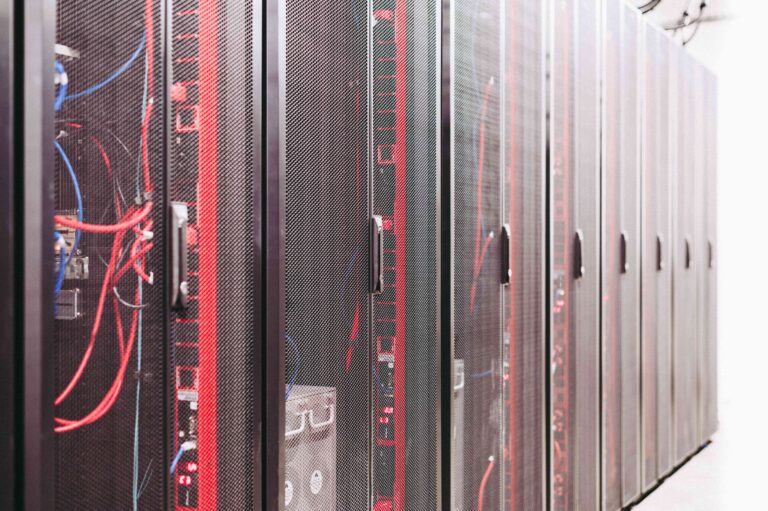
A data center is basically a huge building full of servers: computers stacked in racks, connected by fast networks, and kept cool around the clock. Everything you do online, from cloud storage to online banking, runs on machines like these. That’s also why their size is measured in megawatts: power and cooling are the real limits on how much computing a site can hold.
AI makes data centers even more demanding. Training and running AI models takes billions of simple math operations done at the same time. A regular processor (CPU) works through tasks a few at a time, while a GPU (graphics processing unit) has thousands of smaller cores that work in parallel. GPUs were first built for video game graphics, but this parallel design turned out to be perfect for AI, and that’s why Nvidia’s chips are so wanted right now.
Assembling GPUs is a different job from designing them. Assembly means putting the chip, memory, circuit board, power parts, and cooling together into a working, tested unit. It’s precise engineering work, and doing it in Indonesia means the skills, the testing labs, and the supply chain start to grow here too.
What It Means for Future Engineers
Big investments need people to make them work. Data centers need engineers who understand servers, networking, power systems, and cooling. GPU assembly needs people who can read circuit designs, test hardware, and fix problems at the board level. And AI services running on all this hardware need engineers who know how software and hardware work together.
Right now, Indonesia doesn’t have enough of those people. In August 2026, Deputy Minister of Communication and Digital Affairs Nezar Patria said Indonesia will need around 9 million digital talents by 2030, but at the current pace, it will only produce about 3 million. That leaves a gap of roughly 6 million. The government has also talked about working with chip design company Arm to develop local talent.
This is where computer engineering fits in perfectly. It sits right between electrical engineering and computer science. You learn how processors are built, how embedded systems and networks work, and how to write the code that runs on them. Those are exactly the skills a data center, a GPU assembly line, or an AI startup will be hiring for in the next few years.
Key Takeaways
Nvidia’s planned US$4.5 billion investment in Batam and the start of local GPU assembly near Jakarta show that Indonesia is moving from AI user to AI builder. Data center capacity is set to grow from about 800 MW toward 1.3 GW, and the country could face a shortage of around 6 million digital talents by 2030. The hardware is coming. What Indonesia needs now is the engineers to build, run, and improve it.
Want to be one of them? The Computer Engineering program at BINUS University prepares you to work where hardware meets software, from chips and embedded systems to networks and AI. Explore the program and start building the future of Indonesian tech.
Sources
- Airlangga Sebut Nvidia Mau Investasi Data Center Rp80,1 Triliun, Bisnis.com, 23 September 2026
- Nvidia Plans Rp80.3 Trillion Investment in Batam, BCA Sekuritas, 24 September 2026
- Govt eyes Nvidia investment to increase data center capacity, The Jakarta Post, 12 July 2026
- Arsari Group and Indosat partner with Nvidia to launch domestic AI GPU assembly by late 2026, Indonesia Business Post, 27 August 2026
- Komdigi Gaet Sektor Swasta Tutup Defisit 6 Juta Talenta Digital pada 2030, Bisnis.com, 10 August 2026
Comments :