

Creative Bootcamp 2026
Powered by BINUS and BINUS IEEE Student Branch
· @Denzel
Creative Bootcamp 2026, powered by BINUS and the BINUS IEEE Student Branch, ran for four days from June 22 to 25, 2026, across two campuses of BINUS University: Kampus Anggrek and Kampus Syahdan. The program was built around a simple but urgent premise: Indonesia’s high schoolers, specifically those in the 11th and 12th grades, are coming of age at the exact moment the country’s tech and research landscape is being reshaped by Industry 4.0 and the rise of AIoT. Rather than leaving that shift as an abstraction read about in textbooks, Creative Bootcamp 2026 set out to put it directly into students’ hands, through hardware, code, and a hands-on build process that mirrors how real engineering teams work. Unlike many outreach programs that route through formal school partnerships, this cohort of 28 students arrived entirely on their own initiative: there was no partner-school pipeline feeding the roster, only the students’ own interest in the subject matter pulling them toward BINUS’s doors. That detail matters for how the event should be read; it is evidence of organic demand for deeper tech exposure among Indonesian high schoolers, not a captive audience assembled through institutional obligation, and it speaks directly to the kind of grassroots interest an IEEE Student Branch exists to cultivate and channel.
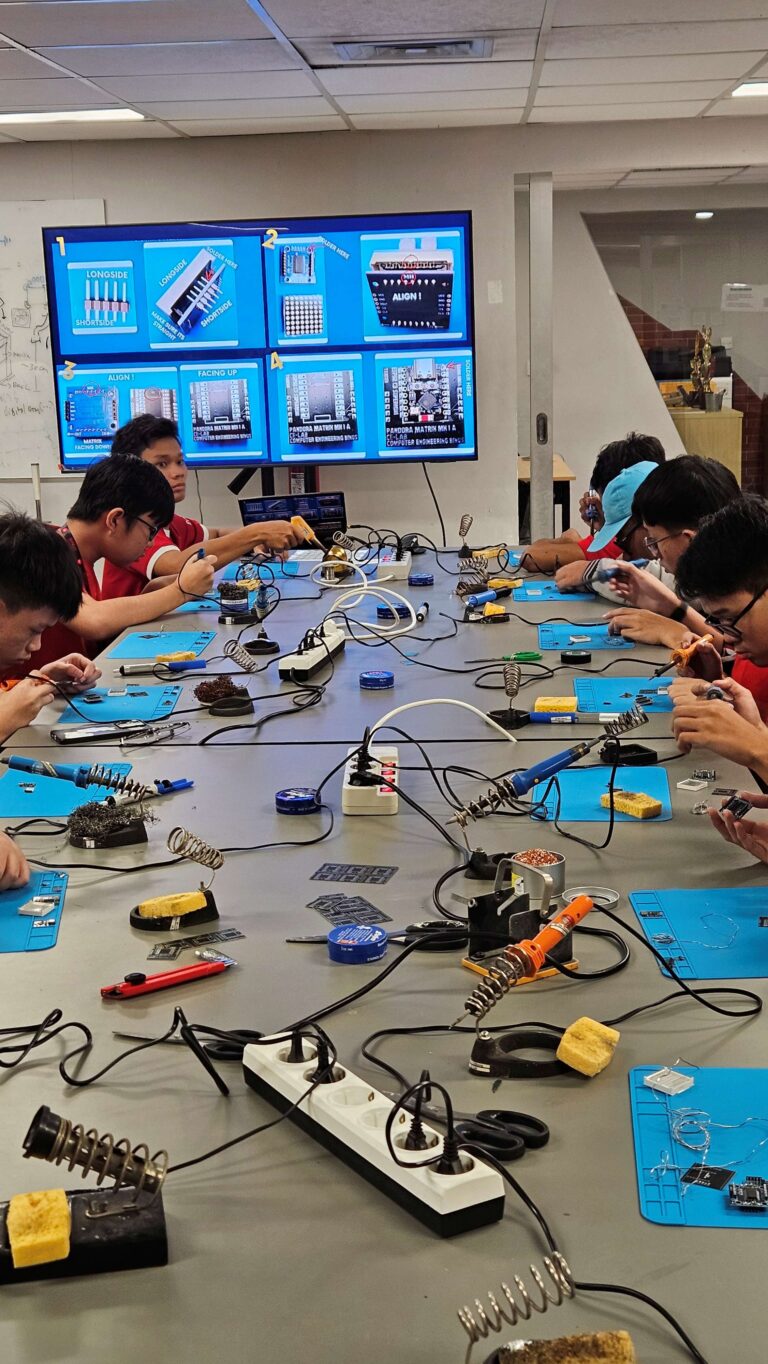
Delivering four days of hands-on technical education to 28 high schoolers took a dedicated operation: 20 personnel drawn jointly from the BINUS IEEE Student Branch and BINUS’s Computer Engineering major were deployed directly into the field and classrooms, running sessions, troubleshooting builds, and mentoring students one-on-one as ideas moved from sketch to working prototype. Notably, half of that personnel roster, 10 of the 20, were freshmen, meaning the event doubled as a proving ground for BINUS’s own newest Computer Engineering students even as they were teaching others. The curriculum itself was deliberately broad, spanning six modules across the four days: AI in general, to ground students in the concepts driving the Industry 4.0 narrative; AI Agents, to show that theory in an applied, interactive form; microcontroller application, as the hardware backbone of nearly every IoT build; an introduction to AutoCAD Fusion 360, giving students a first touch of professional-grade design tooling; an introduction to PCB making, demystifying how the circuit boards inside their devices actually come together; and Electronic Devices, rounding out the foundational knowledge needed to reason about the components they were assembling. Each module was taught in a deliberately fun, approachable format rather than a lecture-heavy one, with the explicit goal of guiding every participant toward building their own, in many cases first-ever, prototype-level tech product by the end of the camp.
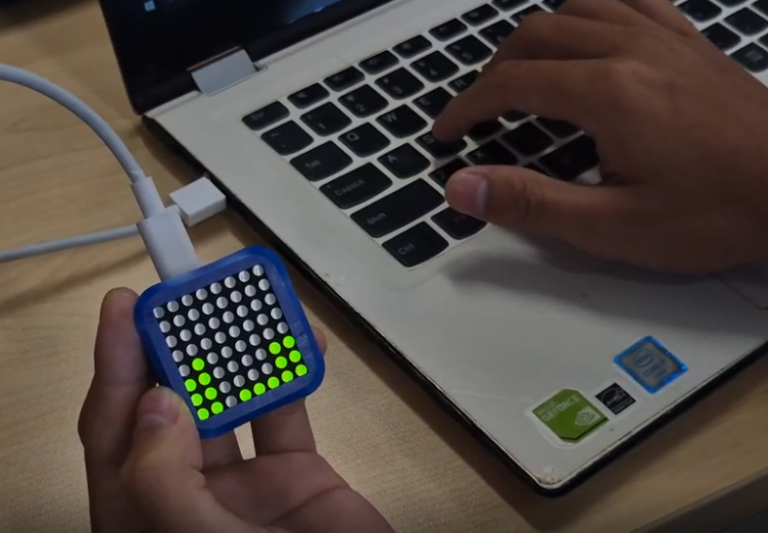
The four days built toward a single culminating moment: a closing presentation and pitch session, where every student or team had to stand up and account for both what they had learned and what they had built. Judging was structured around four criteria: how much genuine experience and learning the student had absorbed over the camp, how successful the resulting project actually was as a working prototype, how creative and original the underlying idea was, and how well the team had functioned together to get there, a deliberate choice that rewarded growth and collaboration, not just a polished final demo. The stakes were real: the top performers walked away with a scholarship valued at approximately Rp 30,000,000, alongside a curated set of Computer Engineering-branded prizes, a programmable LED matrix and a customized ruler-and-screwdriver set, tangible tools that let the recognition double as an invitation to keep building. Framed this way, the pitch session was never just a formality to close out the schedule; it was the moment the entire camp’s premise was tested, asking every student to prove, in their own words and their own hardware, that four days had been enough to turn curiosity about AIoT into something they could actually point to and explain.
As counselor for Creative Bootcamp 2026, the part of this program that stayed with me most wasn’t the curriculum or the prizes, it was watching how our own personnel carried themselves across the four days. Running a camp like this is not a passive assignment: it means being present in the classroom and in the field for the full stretch, anticipating where a student’s build is about to go wrong before they notice it themselves, and staying patient through the fourth repeat of the same explanation. Our 20 personnel did that without needing to be asked twice, and what made it genuinely striking is that ten of them, half the roster, were freshmen, barely a semester or two into their own Computer Engineering journey, yet carrying themselves with the discipline of people who had done this for years. I found myself, more than once, quietly amused and genuinely impressed watching them settle into what I can only describe as a ‘good soldier’ role: showing up early, staying late, and taking ownership of their assigned group of students as if the outcome were personally theirs to protect. That is not something a syllabus can teach, and it is exactly the kind of leadership-under-pressure that an IEEE Student Branch should be proud to have quietly cultivated in its own ranks, even as the headline story was about the high schoolers they were mentoring.
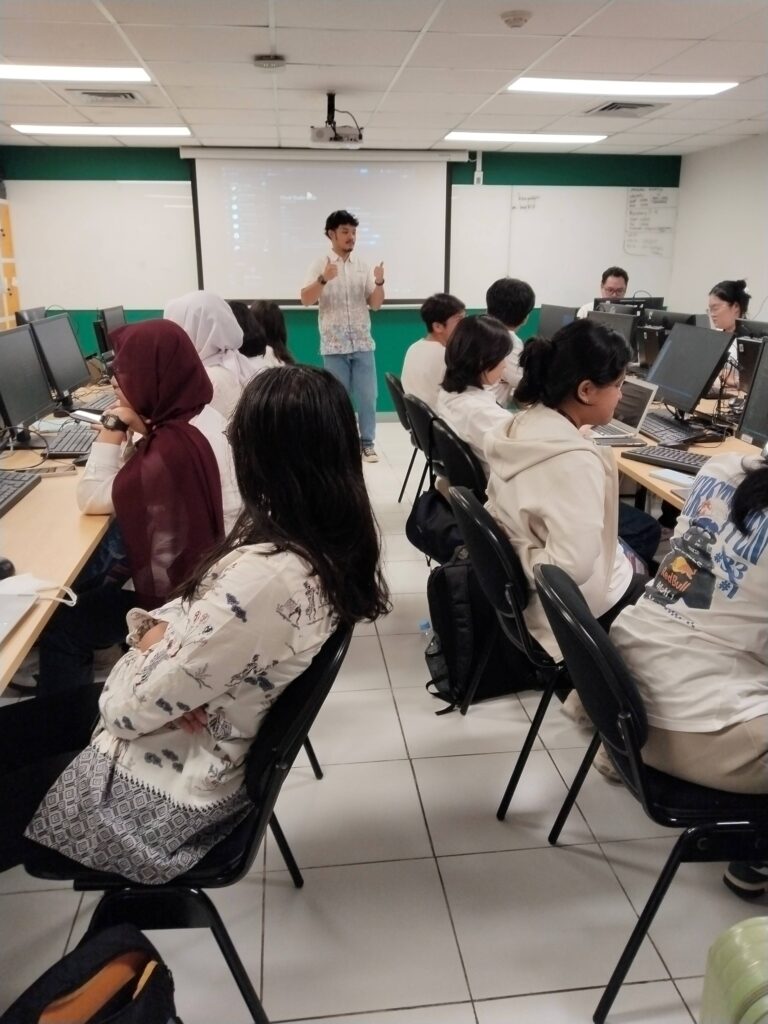
Taken as a whole, Creative Bootcamp 2026 did more than fill four days with workshops; it put a functioning, miniature version of the AIoT and Industry 4.0 pipeline directly into the hands of 28 students who chose to be there, through a team of 20 BINUS personnel who, freshmen and upperclassmen alike, treated the responsibility as fully their own. For an IEEE Student Branch, that combination is close to the ideal case study: organic student demand met with a technically rigorous, mentorship-driven program, closing on a competitive pitch that rewarded real learning over polish. Looking ahead, this report is intended as the foundation for both a public-facing article and an event poster, and photo documentation along with the relevant social media links will be attached to this record as they become available, to give the final materials the visual weight the four days deserve. If there is a single thread worth carrying into future iterations of this program, it is that the self-selected, no-partner-school format seems to be surfacing exactly the kind of motivated student Creative Bootcamp is meant to reach, a signal worth testing again rather than treating as a one-off.
Comments :