


Robotaxis Expand: How Self-Driving Cars Are Hitting the Road in 2026
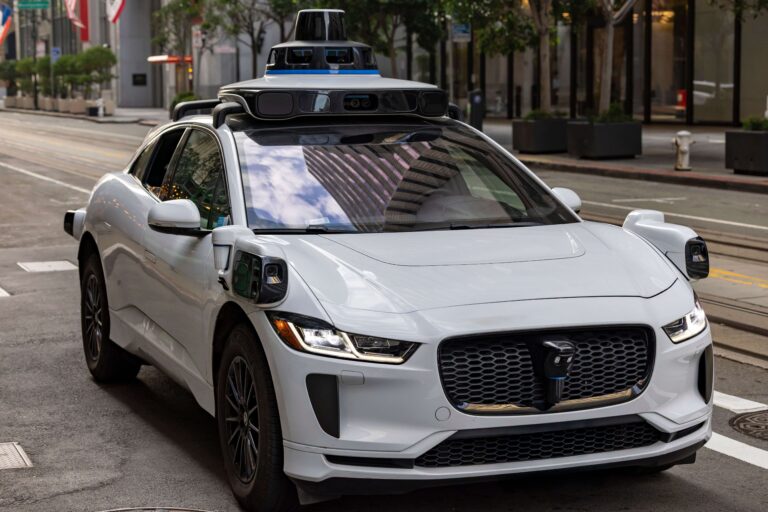
Imagine opening an app, ordering a ride, and a car pulls up with nobody in the driver’s seat. For hundreds of thousands of people in the United States, that’s already a normal part of the week. In 2026, robotaxis, taxis driven entirely by computers, are spreading to more cities faster than ever.
Waymo, owned by Google’s parent company Alphabet, now runs paid driverless rides in 14 US cities, and Tesla is racing to catch up. Behind every one of these cars is a rolling computer packed with sensors, AI, and embedded systems. Here’s what’s happening, how self-driving cars actually work, and why this is one of the most exciting challenges in computer engineering.
What’s Happening
Waymo’s growth this year has been fast. In February 2026, it was giving about 400,000 paid rides per week across six US cities, after quadrupling its number of trips in 2025. “This is an inflection point,” co-CEO Tekedra Mawakana said. By September 1, 2026, when it launched paid rides in Denver, San Diego, and Tampa, Waymo was operating in 14 US cities with a fleet of more than 4,000 vehicles and over 500,000 paid rides every week. Its goal is 1 million weekly rides by the end of 2026, with plans for cities like London and Tokyo too.
Tesla is taking a different route. It launched its first robotaxi service in Austin, Texas, in June 2025 and, according to a Nasdaq report in early 2026, began removing safety monitors from some rides there in January. At the time, its fleet had passed 500 vehicles across Austin and the San Francisco Bay Area, where safety drivers were still on board, with plans to expand to more cities in 2026.
The business is drawing serious attention. Waymo raised US$16 billion at a valuation of about US$126 billion in February 2026, showing how much investors believe in self-driving technology.
The Tech Behind It: How a Car Drives Itself
A self-driving car follows a loop that repeats many times every second: sense, understand, plan, act. First, sensors collect data about the world. Cameras see colors, signs, and traffic lights. Lidar uses laser pulses to build a 3D map of everything around the car, and radar measures the distance and speed of other vehicles, even in rain or fog. Waymo combines all three, while Tesla relies mainly on cameras.
Next, the car’s computer has to understand what it’s seeing. AI models identify pedestrians, cyclists, cars, and road markings, and predict where each one is likely to move next. Then the planning software decides what the car should do: slow down, change lanes, or wait for someone to cross. Finally, control systems send precise commands to the steering, brakes, and motor.
All of this happens on a powerful computer inside the car, not in the cloud. Like the edge AI chips we see in robots and laptops, it has to be fast, reliable, and energy-efficient, because a delay of even a fraction of a second could be dangerous. Safety is the top priority, so these systems include backups and constant self-checks.
What It Means for Future Engineers
Self-driving cars are one of the best examples of computer engineering in action. They combine sensors and signal processing, embedded computers, real-time software, AI, networking, and safety engineering into one system that has to work perfectly in a messy, unpredictable world.
That creates many kinds of jobs. Engineers design the sensor hardware and the computers that process its data, write the software that fuses camera, lidar, and radar information together, build simulation tools to test millions of virtual miles, and develop systems that keep vehicles safe and secure from hacking.
Robotaxis aren’t on Indonesian roads yet, and local traffic brings its own challenges, from motorbikes to crowded streets. But the same technologies are already appearing in driver-assistance features in new cars, in delivery robots, and in automated factories and warehouses. Engineers who understand them will have opportunities wherever smart machines move through the world.
Key Takeaways
By September 2026, Waymo was running driverless rides in 14 US cities with more than 4,000 vehicles and over 500,000 paid rides a week, aiming for 1 million by year-end. Tesla began removing safety monitors from some Austin rides in early 2026 and is expanding too. Every robotaxi depends on the same loop of sensing, understanding, planning, and acting, powered by sensors, onboard AI computers, and real-time software.
Fascinated by machines that can see, think, and move on their own? The Computer Engineering program at BINUS University builds your skills in embedded systems, AI, and intelligent hardware. Explore the program and start engineering the future of mobility.
Sources:
- Waymo begins offering paid robotaxi rides in Denver, San Diego, and Tampa, Crypto Briefing, 1 September 2026
- Waymo co-CEO outlines path to 1 million weekly trips in 2026, Bloomberg via Claims Journal, 12 February 2026
- Waymo robot taxis now running in 10 US cities, TechCentral, 4 March 2026
- Tesla’s robotaxi plans for 2026: is Musk’s timeline finally realistic?, Nasdaq, 2026
Comments :