


Quantum Computing’s Error-Correction Moment
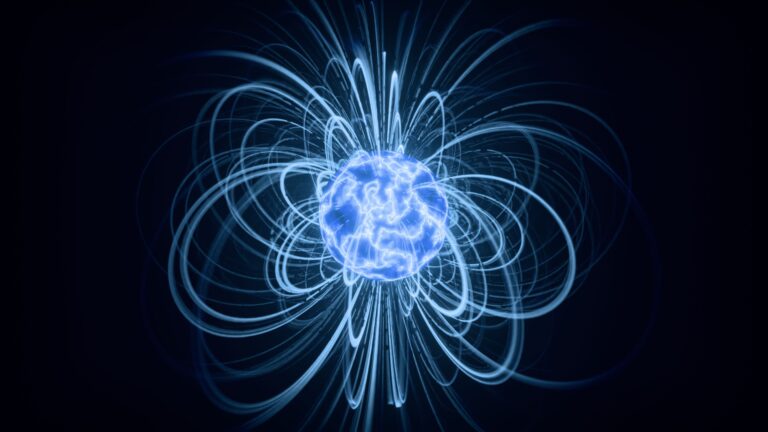
Quantum computers promise to solve certain problems that would take ordinary computers thousands of years, like designing new medicines or materials. But there’s a catch: today’s quantum bits, or qubits, are incredibly fragile. A tiny bit of heat, vibration, or electrical noise can ruin a calculation. Fixing that problem, called quantum error correction, is the biggest challenge in the field.
In 2026, the race to solve it is heating up. In September, startup Infleqtion announced 30 entangled logical qubits, while IBM is working through a roadmap toward a large-scale, fault-tolerant quantum computer by 2029. Here’s what’s happening, what “logical qubits” really are, and why quantum hardware is an exciting frontier for future computer engineers.
What’s Happening
On September 24, 2026, Infleqtion announced that it had entangled 30 logical qubits on its Sqale quantum computer, using just 80 physical qubits made of individual neutral atoms. The company said AI helped it discover a new way to link logical qubits using half as many physical operations. It’s aiming for 100 logical qubits by 2028 and 1,000 by 2030.
Experts were quick to add context. An analysis by PostQuantum pointed out that Infleqtion’s code can detect errors but not fully correct them, which requires a stronger code. Results were also filtered after the fact, by discarding runs where errors were detected. It’s real progress, but not yet the fully error-corrected computing the industry is aiming for.
IBM is pursuing a different path. Its 2026 roadmap includes prototyping a decoder for real-time error correction and demonstrating Kookaburra, the first module of its future Starling system. According to IEEE Spectrum, IBM plans for Starling to deliver 200 logical qubits running 100 million quantum operations, available on the cloud in 2029. IBM says its new error-correcting codes need about one-tenth as many physical qubits as the traditional approach.
The Tech Behind It: Physical vs Logical Qubits
A regular computer bit is either 0 or 1. A qubit can be in a combination of both at the same time, called superposition, and qubits can be linked together through entanglement. These properties let quantum computers explore many possibilities in ways classical computers can’t. But they also make qubits extremely sensitive to their surroundings, so errors happen constantly.
The solution is to spread one piece of information across many physical qubits, creating a single, more reliable logical qubit. Special codes constantly check the group for signs of errors without directly measuring, and destroying, the stored information. If the hardware is good enough, adding more physical qubits makes the logical qubit better, not worse. Google demonstrated this effect for the first time in 2023, showing that a bigger error-correcting code produced a lower error rate.
There’s a difference between detecting an error and correcting it. Detection tells you something went wrong, so you can throw away that result. Correction fixes the error while the computation keeps running. For useful, long calculations, true error correction is essential, and it needs fast classical electronics and software to decode errors in real time.
What It Means for Future Engineers
Quantum computing isn’t only for physicists. Every quantum computer depends on a large amount of classical engineering: control electronics that send precise signals to qubits, fast processors and FPGAs that decode errors in real time, cooling and measurement systems, and software that translates programs into quantum operations. IBM’s plan to prototype a real-time error-correction decoder in 2026 is a perfect example of this hardware-software teamwork.
It’s also an area where honesty and careful testing matter. As the discussion around Infleqtion’s result shows, engineers and scientists need to clearly understand what a result proves, and what it doesn’t, before calling it a breakthrough.
You don’t need a lab to start learning. Free online tools from companies like IBM let anyone write simple quantum programs and run them on real quantum hardware in the cloud. A solid foundation in programming, digital logic, linear algebra, and computer architecture will help you understand how quantum and classical computers will work together in the future.
Key Takeaways
Error correction is the key to useful quantum computers. In September 2026, Infleqtion entangled 30 logical qubits using 80 atoms, though experts noted its code detects rather than fully corrects errors. IBM is building toward Starling, a fault-tolerant system with 200 logical qubits planned for 2029, starting with Kookaburra in 2026. Behind every step is a lot of classical engineering, from control electronics to real-time decoders.
Curious about the computers of the far future and the engineering that makes them possible? The Computer Engineering program at BINUS University builds a strong foundation in computer architecture, digital systems, and programming. Explore the program and get ready for the next era of computing.
Sources
- Infleqtion Achieves 30 Entangled Logical Qubits on Its Sqale Quantum Computer, Infleqtion, 24 September 2026
- Infleqtion 30 logical qubits rely on error detection, PostQuantum, 27 September 2026
- Quantum 2026 roadmap, IBM
- IBM’s plan for quantum error correction and Starling, IEEE Spectrum, 10 June 2025
- Suppressing quantum errors by scaling a surface code logical qubit, Google Research, 22 February 2023
Comments :