

Fiber-Optic Cables That Detect Tsunamis: How Engineering Protects Indonesia
Indonesia sits where three major tectonic plates meet, which makes it one of the most earthquake- and tsunami-prone countries in the world. When a tsunami forms, every minute of warning can save lives. The challenge is detecting it fast enough, out in the deep sea, before the waves reach the shore.
An exciting solution is hiding in plain sight: the undersea fiber-optic cables that already carry the internet. Indonesian researchers and agencies are working on ways to turn these cables, and new cable-based sensors, into a tsunami detection network. Here’s what’s happening, how a cable can “feel” the ocean, and why this is engineering that truly protects people.
What’s Happening
The Indonesian government, Universitas Gadjah Mada (UGM), Telkom Indonesia, and the meteorology agency BMKG are developing submarine optical cables that can detect pressure changes and underwater waves as early signs of a tsunami, according to ANTARA. Indonesia has 13 megathrust zones, large faults where powerful earthquakes can happen, and the Sunda Strait and Mentawai-Siberut areas are priorities. “If this optical cable can detect tsunamis, then sensors can be more evenly distributed,” BMKG head Dwikorita Karnawati said in May 2025. The technology still needs feasibility and safety testing before it joins the national tsunami early warning system, InaTEWS.
Cable-based sensors are already being deployed in some areas. In September 2026, the disaster agency of Ende Regency in East Nusa Tenggara said its northern coast is now covered by Ina-CBT (Indonesia Cable Based Tsunameter), an undersea cable sensor system installed with the national research agency BRIN. It helps detect underwater landslides and seismic activity, working alongside BMKG’s real-time monitoring.
Indonesia isn’t alone. A global program called SMART subsea cables, supported by UNESCO and the International Telecommunication Union, encourages adding scientific sensors to new communication cables, according to detikInet.
The Tech Behind It: How a Cable Feels the Ocean
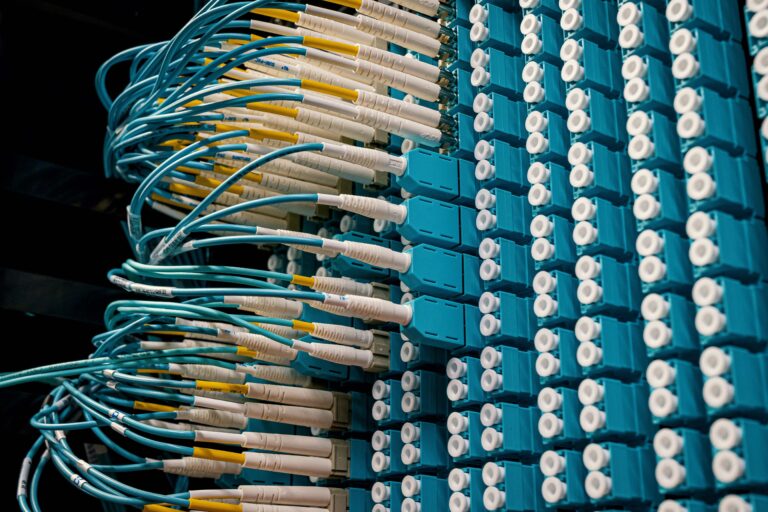
A fiber-optic cable carries data as pulses of light through extremely thin strands of glass. About 99% of the world’s internet traffic travels through these undersea cables, and together they stretch over 1.7 million kilometers across the ocean floor. That means they’re already sitting near many of the places where earthquakes and tsunamis begin.
One method, called Distributed Acoustic Sensing (DAS), sends laser pulses into the fiber and measures tiny changes in the light that reflects back. When the seafloor shakes or water pressure changes, the cable stretches by tiny amounts, and those changes show up in the light signal. In effect, a single cable becomes thousands of sensors along its length, like a giant underwater microphone. Other systems, like Ina-CBT, attach pressure and seismic sensors to the seafloor and use a cable to send their data to shore in real time.
The hardest part comes after the data arrives. Computers must process huge streams of signals, filter out noise from ships and marine life, and decide within seconds whether a real tsunami is forming. That requires fast signal processing, reliable networks, and smart algorithms, all working together.
What It Means for Future Engineers
Early warning systems are some of the most meaningful projects an engineer can work on. They combine many parts of computer engineering: sensors and electronics that survive deep underwater, embedded systems that collect and send data, networks that stay online during disasters, and software that analyzes signals in real time.
Indonesia’s geography makes this especially important. With 13 megathrust zones and thousands of kilometers of coastline, the country needs engineers who can design, build, and maintain these systems, and improve them with new methods such as machine learning to tell real tsunami signals apart from background noise.
It’s also a great example of how technology can serve more than one purpose. A cable built to carry internet traffic can also help save lives, if engineers find a clever way to use it. That kind of creative, cross-disciplinary thinking is exactly what computer engineering trains you to do.
Key Takeaways
Indonesia is developing undersea optical cables that can detect early tsunami signs, in a partnership between the government, UGM, Telkom Indonesia, and BMKG, with the Sunda Strait and Mentawai-Siberut as priority areas. Cable-based sensors like Ina-CBT are already covering places such as the northern coast of Ende. Turning cables into sensors relies on light, electronics, networks, and fast data processing, all core parts of computer engineering.
Want to use technology to keep people safe? The Computer Engineering program at BINUS University builds your skills in sensors, embedded systems, networks, and signal processing. Explore the program and start engineering solutions that matter.
Sources:
- Indonesia plans submarine optical cables for tsunami detection, ANTARA, 30 May 2025
- Pesisir Utara Ende Kini Dilengkapi Sensor Pendeteksi Tsunami Bawah Laut, RRI, 16 September 2026
- Kabel Laut Jadi ‘Mikrofon Raksasa’ Deteksi Tsunami hingga Suara Paus, detikInet, 5 March 2026
- BMKG’s additional sensors to improve tsunami early warning system, ANTARA, 10 March 2022
Comments :