



Who Built the Very First EV, Why It Dominated Early Cities, and Why It Disappeared
The 21st-Century Illusion: Electric Cars Are Older Than Gasoline Cars
Long before Tesla, BYD, or even the gasoline automobile, silent battery-powered cars ruled urban streets.
Step onto almost any city boulevard today and you will see sleek, near-silent electric vehicles from Tesla, BYD, Hyundai, and Porsche gliding effortlessly past gas stations. With giant touchscreens, instant torque, and over-the-air software updates, it is easy to assume that the electric car is a cutting-edge invention of the modern smartphone era.
In reality, the exact opposite is true: the electric car is older than the gasoline car (U.S. Department of Energy, 2014). While Karl Benz patented his famous gasoline-powered Motorwagen in 1886, inventors across Europe were already building experimental battery-powered carriages in the 1830s—more than half a century earlier (U.S. Department of Energy, 2014; Smithsonian Institution, n.d.). By the year 1900, quiet, clean electric automobiles accounted for roughly one-third of all vehicles on American roads (U.S. Department of Energy, 2014).
So how did a technology that once dominated city streets vanish so completely that most people forgot it ever existed? To answer that, we need to go back to the workshops of 19th-century tinkerers—and trace how a single battery breakthrough turned novelty carts into the luxury cars of the Gilded Age.
The Very First Electric Vehicles: From Crude Carts to the First Real Car
The 1828–1839 Pioneers and the Disposable Battery Problem
Long before anyone dreamed of highway road trips, physicists and clockmakers were experimenting with electromagnetism to turn wheels:
- 1828 — Ányos Jedlik (Hungary): A Hungarian Benedictine priest and physicist invented an early direct-current electric motor and mounted it onto a small model railcar, proving electricity could produce continuous rotary motion (U.S. Department of Energy, 2014).
- 1832–1839 — Robert Anderson (Scotland): A Scottish inventor built one of the world’s earliest full-scale crude electric carriages powered by non-rechargeable primary galvanic cells (U.S. Department of Energy, 2014; Smithsonian Institution, n.d.).
- 1835 — Sibrandus Stratingh & Christopher Becker (Netherlands): Professor Sibrandus Stratingh of Groningen and his assistant Christopher Becker constructed a small-scale electric carriage powered by non-rechargeable voltaic cells (U.S. Department of Energy, 2014).
Why didn’t these early machines spark a transportation revolution in the 1830s? They all hit the exact same brick wall: rechargeable batteries had not been invented yet. Those early vehicles relied on single-use chemical cells. Once the zinc and acid inside the battery were consumed, the battery was dead for good—meaning every drive required replacing expensive chemicals by hand.
The 1859–1881 Battery Breakthrough
https://www.motoma.com/industry/history-and-evolution-of-rechargeable-batteries.html
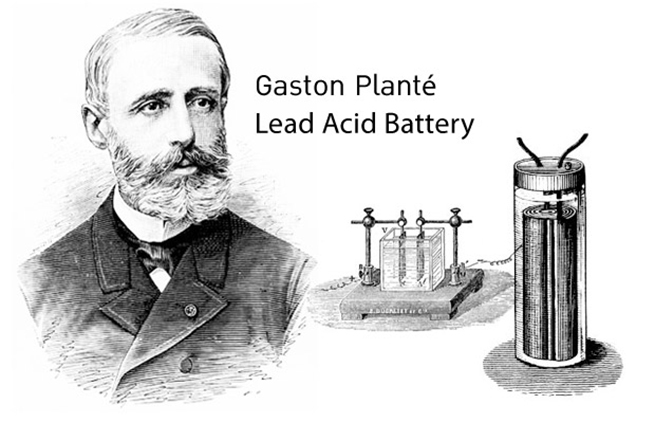
Everything changed in 1859, when French physicist Gaston Planté invented the lead-acid rechargeable battery—the direct ancestor of the 12-volt battery still sitting under the hood of modern cars today (U.S. Department of Energy, 2014). In 1881, fellow French engineer Camille Alphonse Faure dramatically improved Planté’s design by coating lead plates with a lead-oxide paste, multiplying storage capacity and making batteries practical to manufacture at scale (U.S. Department of Energy, 2014).
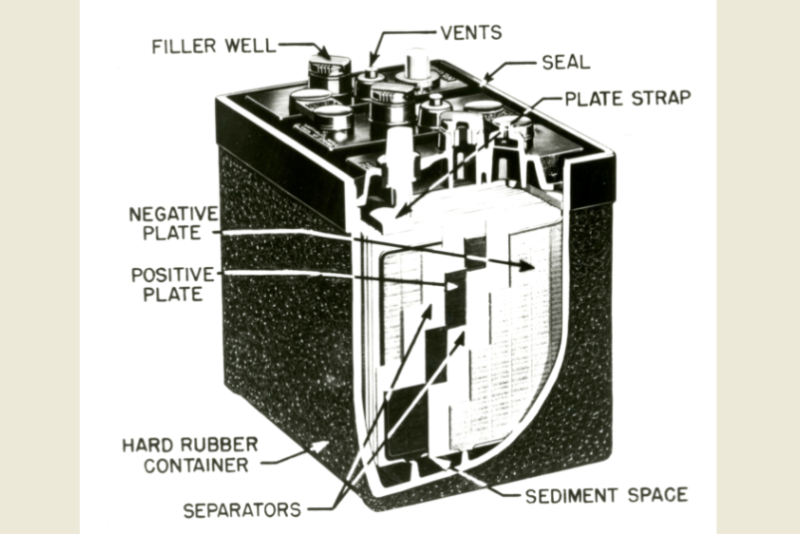
Camille Alphonse Faure Improved The Lead-Acid Battery https://blog.upsbatterycenter.com/camille-alphonse-faure-improved-the-lead-acid-battery/
The First Practical Electric Vehicles (1881–1890)

Figure 1. The 1888 Flocken Elektrowagen — World’s First Four-Wheeled Electric Passenger Car (Coburg, Germany)
Armed with Faure’s improved rechargeable batteries, inventors on both sides of the Atlantic quickly turned the electric vehicle from a laboratory curiosity into a working road machine:
- 1881 — Gustave Trouvé (France): French electrical engineer Gustave Trouvé unveiled a working three-wheeled electric tricycle on the streets of Paris, powered by an improved rechargeable lead-acid battery and reaching roughly 12 km/h (7.5 mph) (Wakefield, 1994).
- 1884 — Thomas Parker (England): English inventor Thomas Parker—who also helped electrify the London Underground—built an early production-capable electric car in Wolverhampton using his own specially designed high-capacity rechargeable batteries (U.S. Department of Energy, 2014).
- 1888 — Andreas Flocken (Germany): German engineer Andreas Flocken built the Flocken Elektrowagen in Coburg, widely recognized by automotive historians as the world’s first true four-wheeled electric passenger car. Featuring iron-rimmed wooden wheels, a motor rated around 7 kW (0.9 hp), and a ~100 kg lead-acid battery pack, it reached a top speed of 15 km/h (9 mph) (Deutsches Museum, n.d.; Wikimedia Commons, n.d.).
- 1890 — William Morrison (United States): Scottish-born chemist William Morrison debuted the first successful electric automobile in the United States in Des Moines, Iowa. Carrying six passengers at up to 14 mph (22.5 km/h) with a range of roughly 50 miles (80 km) per charge, Morrison’s wagon dazzled crowds at the 1893 Chicago World’s Fair and ignited the American EV boom (U.S. Department of Energy, 2014).
| Figure 1 [Archival Photograph]: The 1888 Flocken Elektrowagen — World’s First Four-Wheeled Electric Passenger Car (Coburg, Germany)
Target Archive & Verified Source URL: https://specialcarsphotos.com/cars/flocken-elektrowagen/ |
The Golden Age (1895–1912): Why Early Drivers Loved Electric Cars
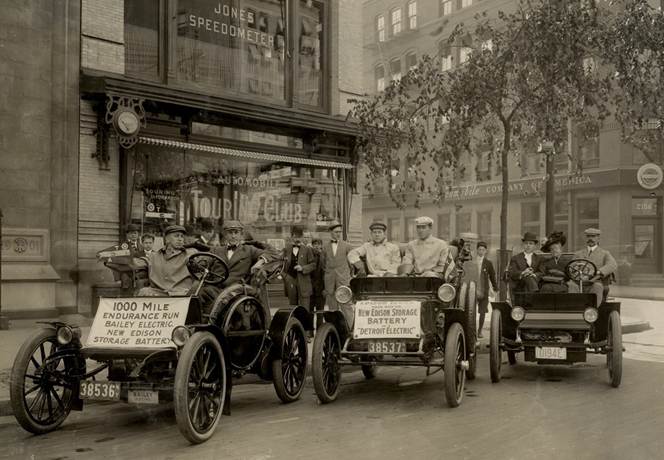
Figure 2, “Detroit Electric” OR “Baker Electric” https://earlyelectric.com/edison.html
At the turn of the 20th century, nobody knew which technology would win the future of personal transport. In 1900, American automakers produced 4,192 cars: roughly 40% were powered by steam, 38% by electricity, and only 22% by gasoline (U.S. Department of Energy, 2014; Smithsonian Institution, n.d.). In major cities, electric cars were easily the favorite choice for anyone who could afford one.
Steam vs. Gasoline vs. Electric in 1900
To understand why early motorists preferred electric cars over gasoline, compare what it actually took to drive each type of vehicle in 1900:
- Steam Cars (e.g., Stanley Steamer): Powerful and fast once warmed up, but drivers had to light a kerosene burner and wait up to 45 minutes on cold mornings just to boil water into usable steam—and refill water tanks frequently (U.S. Department of Energy, 2014).
- Early Gasoline Cars: Noisy, vibrating machines that belched thick black exhaust smoke, leaked oil, required wrestling with a stiff, unsynchronized manual gearshift, and had to be started with a heavy front hand crank. If the engine backfired, the crank could spin violently backward and break the driver’s wrist or arm (U.S. Department of Energy, 2014; Smithsonian Institution, n.d.).
- Early Electric Cars (e.g., Baker Electric, Detroit Electric, Columbia): Started instantly with the simple turn of a key or switch, produced zero exhaust fumes or soot, had no manual transmission gears to shift, and glided quietly through neighborhoods without startling horses (Smithsonian Institution, n.d.).
City Taxi Fleets, Doctors, and Breaking the 100 km/h Barrier
Because cities were compact and newly paved, early EVs excelled at urban duty. In 1897, Walter Bersey launched London’s first fleet of electric taxicabs, and that same year the Electric Carriage and Wagon Company introduced a fleet of more than 60 electric taxis in New York City (U.S. Department of Energy, 2014). Physicians also favored electric runabouts because they could jump in for midnight house calls without cranking an engine in the freezing rain.
Typical early urban electric cars—such as models built by Baker Electric and the Anderson Electric Car Company (Detroit Electric)—traveled 20 to 40 miles (32–65 km) per charge at a comfortable city pace of 15 to 20 mph (24–32 km/h), with later luxury models stretching range to 60–80 miles (96–130 km) under ideal conditions (Smithsonian Institution, n.d.; U.S. Department of Energy, 2014). Nor were early EVs slow when pushed: on April 29, 1899, Belgian racing driver Camille Jenatzy piloted his bullet-shaped electric racer, La Jamais Contente (“The Never Satisfied”), to 105.88 km/h (65.79 mph)—becoming the first road vehicle of any kind to break the 100 km/h barrier (Guinness World Records, n.d.; Wikimedia Commons, n.d.).
Why Early Electric Cars Disappeared (1912–1935)
If electric cars were cleaner, quieter, and easier to drive, what went wrong? Between 1912 and 1935, four major technological and economic shifts converged to wipe out the first generation of electric cars:
- The 1912 Electric Starter Motor: In 1911–1912, engineer Charles Kettering invented the electric self-starter, first introduced on the 1912 Cadillac (U.S. Department of Energy, 2014). Ironically, a small electric motor saved the gasoline car: drivers no longer had to risk broken bones with a hand crank, erasing the single biggest usability advantage of electric cars overnight.
- Henry Ford’s Assembly Line & The Price Gap (Inflation-Adjusted): After Henry Ford introduced moving assembly-line mass production for the Model T (1908–1927), the price of a brand-new gasoline car plunged from $850 down to $260–$650—roughly $4,700 to $11,500 in today’s money (U.S. Department of Energy, 2014; U.S. Bureau of Labor Statistics, 2026). Meanwhile, hand-built electric cars weighed down by expensive lead-acid batteries still sold for $1,750 to $3,000+—equivalent to roughly $32,000 to $55,000+ today—making EVs an unaffordable luxury for average families (U.S. Department of Energy, 2014; U.S. Bureau of Labor Statistics, 2026).
- Cheap Gasoline & The Rise of Intercity Highways: Massive oil discoveries in Texas, California, and Oklahoma made gasoline cheap and plentiful across North America (U.S. Department of Energy, 2014). At the same time, newly paved highway networks encouraged drivers to travel between cities and into the countryside—where electric cars couldn’t follow because most rural towns and farms didn’t even have electrical grids yet (U.S. Department of Energy, 2014).
- Stagnant Battery Energy Density & Slow Charging: Even when Thomas Edison and Henry Ford teamed up around 1914 to develop a lighter, more durable nickel-iron battery for an affordable electric car, batteries simply could not store enough energy per kilogram to compete with a tank of liquid gasoline (Smithsonian Institution, n.d.). By 1935, commercial electric passenger cars had virtually disappeared from the market (U.S. Department of Energy, 2014).
| The Cost Shock in 1915 vs. Today’s Dollars
In the mid-1910s, a mass-produced Ford Model T Runabout ($390–$440) cost roughly $12,000–$13,800 adjusted for modern inflation, whereas a luxury Detroit Electric ($2,500–$3,000) cost the modern equivalent of $78,000–$94,000 while offering a fraction of the highway range (U.S. Department of Energy, 2014; U.S. Bureau of Labor Statistics, 2026). For everyday drivers, the math was impossible to ignore. |
Summary Timeline & The Modern Comeback
Looking across nearly two centuries of automotive history reveals a remarkable pattern: the electric motor itself was never the problem. Even 19th-century electric motors were reliable, quiet, and efficient. Everything hinged on the battery and charging network.
| Year / Era | Milestone / Pioneer | Key Specs & Performance | Historical Impact |
| 1832–1839 | Robert Anderson (Scotland) |
Crude electric carriage using non-rechargeable primary cells | Proved electric locomotion worked, but single-use batteries made driving impractical. |
| 1859 | Gaston Planté (France) |
First rechargeable lead-acid battery (improved by Faure in 1881) | Unlocked reusable energy storage, making practical electric vehicles possible. |
| 1888 | Andreas Flocken (Flocken Elektrowagen) |
~0.7 kW (0.9 hp) motor, ~100 kg lead-acid pack, 15 km/h (9 mph) | Widely recognized as the world’s first four-wheeled electric passenger car. |
| 1899 | Camille Jenatzy (La Jamais Contente) |
68 hp dual electric motors; 105.88 km/h (65.79 mph) top speed | First road vehicle of any kind to break the 100 km/h land speed barrier. |
| 1900–1912 | Golden Age of Early EVs (Baker, Detroit Electric) |
~1/3 of U.S. cars; 20–40 mi range (up to 80 mi later) at 15–20 mph | Dominated city taxi fleets, doctors’ rounds, and quiet luxury urban transport. |
| 1912–1935 | Model T & Kettering Electric Starter | Model T <$300–$650 vs. EVs $1,750–$3,000+; rural grid absent | Affordable gas cars, electric starters, and highways ended the first EV era. |
| 1991–2008+ | Lithium-Ion Battery & Modern EV Revival |
Commercial Li-ion (1991), Tesla Roadster (2008, 244 mi range) | High-density batteries and fast-charging networks revived the electric car. |
When Sony commercialized the rechargeable lithium-ion battery in 1991 and Tesla launched the lithium-ion Roadster in 2008 (achieving 244 miles per charge), engineers finally cracked the exact three problems that had defeated early EV pioneers a century earlier: battery energy density, charging speed, and nationwide electrical infrastructure (U.S. Department of Energy, 2014). Today’s electric cars are not a brand-new idea—they are the long-delayed triumph of a 19th-century vision that arrived more than a hundred years ahead of its battery.
References
Deutsches Museum. (n.d.). Flocken Elektrowagen (1888) — Automotive engineering collection. Deutsches Museum Digital. https://digital.deutsches-museum.de/
Guinness World Records. (n.d.). First road vehicle to exceed 100 km/h (La Jamais Contente, April 29, 1899). Guinness World Records. https://www.guinnessworldrecords.com/
Smithsonian Institution. (n.d.). America on the Move: Electric vehicles in the early 20th century (Baker Electric & Detroit Electric). National Museum of American History. https://americanhistory.si.edu/explore/exhibitions/america-on-the-move
U.S. Bureau of Labor Statistics. (2026). CPI inflation calculator (1913–2026 historical purchasing power series). U.S. Department of Labor. https://www.bls.gov/data/inflation_calculator.htm
U.S. Department of Energy. (2014, September 15). The history of the electric car. Energy.gov. https://www.energy.gov/articles/history-electric-car
Wakefield, E. H. (1994). History of the electric automobile: Battery-only powered cars (pp. 15–42). Society of Automotive Engineers (SAE International).
Wikimedia Commons. (n.d.). Category: Detroit Electric — Historical photographs. Wikimedia Foundation. https://commons.wikimedia.org/wiki/Category:Detroit_Electric
Wikimedia Commons. (n.d.). File: Flocken Elektrowagen 1888.jpg. Wikimedia Foundation. https://commons.wikimedia.org/wiki/File:Flocken_Elektrowagen_1888.jpg
Comments :