



Modern Battery: Li-Ion, LiPo, LiFePO4, Sodium-Ion, NiMH, and Solid-State—How Each Works and Where It Is Used
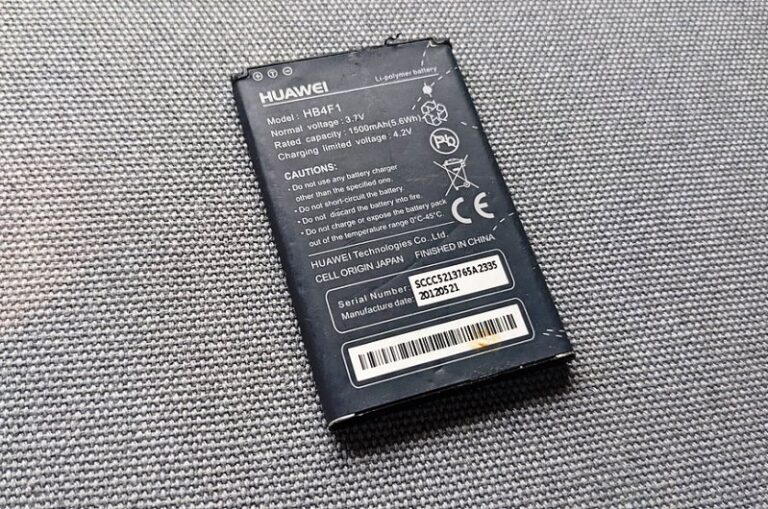
Phone Battery, https://blog.upsbatterycenter.com/what-is-in-the-cellphone-battery/
Look inside four everyday devices and you will find four completely different battery chemistries. Your laptop runs on cylindrical Lithium-Ion (Li-Ion) cells, a racing drone relies on high-burst Lithium Polymer (LiPo) pouches, a home solar station uses Lithium Iron Phosphate (LiFePO4), and your TV remote still uses NiMH AA cells. No single battery chemistry wins every category because engineers must constantly balance five competing physical trade-offs: energy density (watt-hours per kilogram), discharge rate (C-rate), cycle life, thermal safety, and cost per kilowatt-hour (Battery University, 2023a; BatteryMBA, 2026). Boosting one metric—such as packing maximum energy into a slim phone—typically raises cost or lowers thermal stability.The 6 Modern Battery Types Explained
1. Standard Lithium-Ion (Li-Ion — NMC / NCA Cylindrical & Prismatic Cells)

Litihium Ion Size, https://batteryswapstation.com/cylindrical-lithium-ion-battery/
Standard Lithium-Ion (Li-Ion) batteries shuttle lithium ions between a graphite anode and a layered metal-oxide cathode—most commonly NMC (Nickel Manganese Cobalt) or NCA (Nickel Cobalt Aluminum)—through a liquid organic electrolyte (Battery University, 2023a). They typically come sealed inside standardized steel cans like18650 (18 mm × 65 mm), 21700, and 4680 cells.
- Key Specs: Nominal cell voltage of 3.6 V–3.7 V (
4.2 Vfull charge), gravimetric energy density of 150–260+ Wh/kg, and a lifespan of 1,000–2,500 charge cycles (Battery University, 2023a; BatteryMBA, 2026). - Pros: High energy density per gram, very low self-discharge (~1–2% per month), and mature global manufacturing.
- Cons: Thermal runaway can trigger around 150 °C–210 °C if punctured or overcharged without a Battery Management System (BMS), and relies on expensive nickel and cobalt (Battery University, 2022; BatteryMBA, 2026).
- Where It Is Used: Laptops, USB-C power banks, cordless power tools, e-bikes, and long-range electric vehicles.
2. Lithium Polymer (LiPo — Soft Pouch Cells)
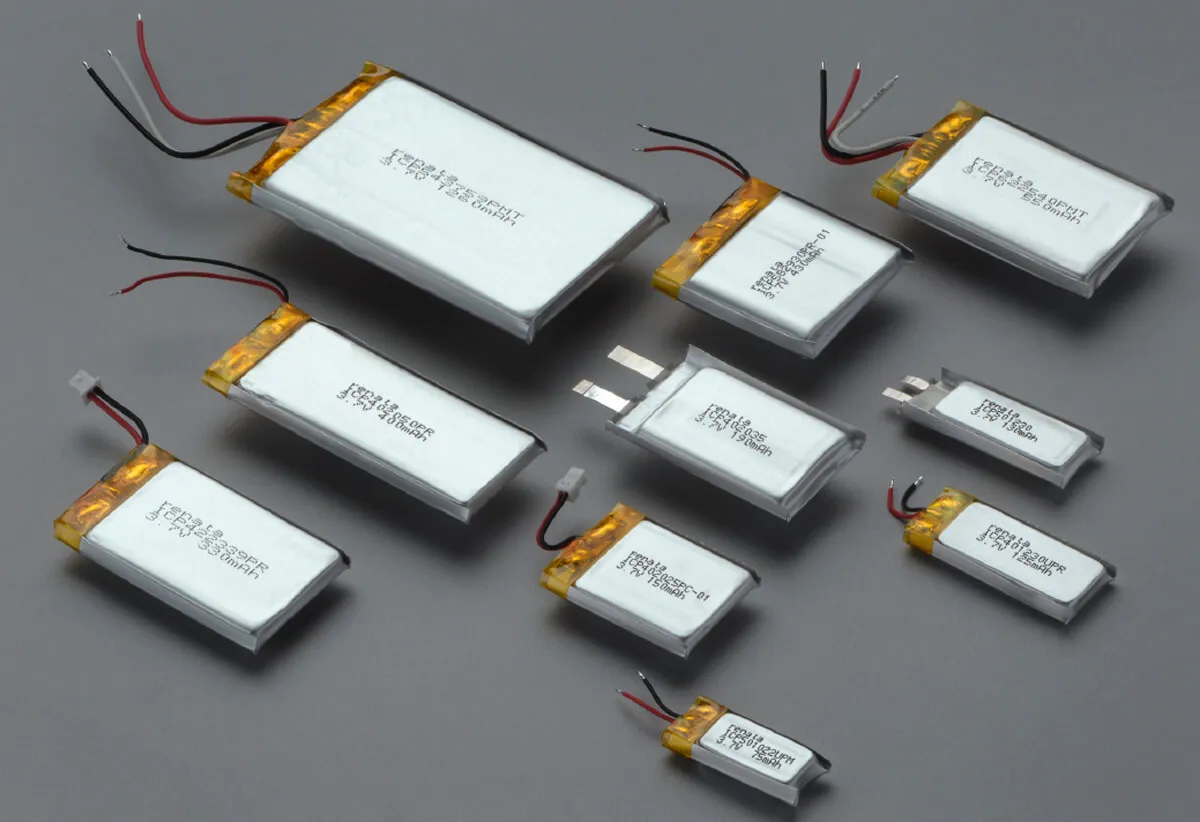
Lithium Polymer (LiPo), https://www.takomabattery.com/ultimate-buying-guide-for-lithium-polymer-battery/
A Lithium Polymer (LiPo) battery uses the same core lithium-ion electrochemistry at 3.7 V nominal, but replaces the heavy steel can with a lightweight, flexible aluminum-laminated foil pouch and a gelled polymer electrolyte (Battery University, 2021b). Removing the rigid metal shell lets manufacturers tailor cell thickness and footprint to tight enclosures.- Key Specs: Nominal voltage of 3.7 V per cell (e.g., a
4Spack equals14.8 Vnominal /16.8 Vfull), energy density of 150–250 Wh/kg, and a lifespan of 300–500 cycles under heavy discharge loads (Battery University, 2021b). - Pros: Ultra-lightweight pouch design, custom flat shapes, and extreme burst discharge rates (30C to 120C+) for massive instantaneous current.
- Cons: No rigid puncture protection, prone to gas swelling (“puffing”) if over-discharged below
3.0 V/cellor stored fully charged in heat, and higher fire risk upon impact. - Where It Is Used: FPV racing drones, RC airplanes and cars, ultra-thin smartphones, smartwatches, and handheld gaming consoles.
3. Lithium Iron Phosphate (LiFePO4 / LFP)
Litihum Iron Phosphate Battery, https://sinoatrium.com/our-services/lead-acid-hybrid-car-battery/
Lithium Iron Phosphate (LiFePO4 or LFP) replaces expensive nickel and cobalt with abundant iron and phosphate in an olivine crystal structure (Battery University, 2023a). Because phosphorus-oxygen bonds are far stronger than cobalt-oxide bonds, LFP cells resist structural breakdown even under severe electrical or mechanical abuse.- Key Specs: Nominal voltage of 3.2 V–3.3 V per cell (
3.65 Vfull charge; four cells in series form a drop-in12.8 Vbattery), energy density of 90–160 Wh/kg (up to ~180–200 Wh/kg in modern blade cells), and an extraordinary lifespan of 3,000–6,000+ cycles (BatteryMBA, 2026; Symtech Solar, 2026). - Pros: Exceptional thermal safety (thermal runaway threshold around ~270 °C, rarely catching fire even when pierced), 10-year+ daily cycle durability, and cobalt-free chemistry (BatteryMBA, 2026).
- Cons: Heavier and bulkier per kilowatt-hour than NMC Li-Ion, and reduced charging capability below freezing (
0 °C) without built-in cell heaters (Symtech Solar, 2026). - Where It Is Used: Portable power stations (EcoFlow, Bluetti, Jackery), residential solar storage, RVs/boats, and standard-range EVs (Tesla Model 3/Y RWD, BYD Blade).
4. Nickel-Metal Hydride (NiMH — Modern Rechargeable AA/AAA)

Modern Ni-MH Rechargeable Cells, https://en.wikipedia.org/wiki/Nickel%E2%80%93metal_hydride_battery
Nickel-Metal Hydride (NiMH) batteries use a nickel oxyhydroxide positive electrode and a hydrogen-absorbing alloy negative electrode in a non-flammable aqueous potassium hydroxide electrolyte (Battery University, 2021a). Modern Low Self-Discharge (LSD) NiMH cells—popularized by Panasonic Eneloop—retain up to 85% of their charge after a full year on the shelf (Battery University, 2021a).- Key Specs: Nominal cell voltage of 1.2 V (vs.
1.5 Vfor disposable alkaline cells), gravimetric energy density of 60–120 Wh/kg, and a lifespan of 500–2,000 charge cycles (Battery University, 2021a). - Pros: Zero thermal runaway fire risk, tolerant of rough handling, strong cold-weather discharge, and drop-in AA/AAA convenience.
- Cons: Lower energy density than lithium cells, heavier weight, and lower
1.2 Vnominal voltage that can trigger early low-battery alerts in voltage-sensitive gadgets. - Where It Is Used: Wireless mice and keyboards, camera flashes, kids’ toys, TV remotes, and classic hybrid vehicles (Toyota Prius).
5. Sodium-Ion (Na-Ion — The Emerging Cobalt- & Lithium-Free Alternative)

Litihium Sodium-ion Cell, https://en.wikipedia.org/wiki/Sodium-ion_battery
Sodium-Ion (Na-Ion) batteries mirror the rocking-chair architecture of Li-Ion, but replace scarce lithium ions with abundant sodium ions (Na⁺) paired with a hard-carbon anode and Prussian white, layered oxide, or polyanion cathodes (Veken Industry, 2026; Symtech Solar, 2026). Because sodium ions are larger and heavier than lithium ions, Na-Ion trades peak compactness for supply-chain abundance and freezing-weather resilience.- Key Specs: Nominal voltage of 3.0 V–3.1 V per cell, commercial energy density of 100–160 Wh/kg (with CATL’s Naxtra passenger-vehicle cells reaching 175 Wh/kg in 2025–2026), and 4,000–10,000+ cycles (BatteryMBA, 2026; Symtech Solar, 2026).
- Pros: Lithium-, cobalt-, and copper-free (uses low-cost aluminum foil on both electrodes), retains >90% capacity at −20 °C and ~80% at −40 °C, and can safely be discharged and shipped at
0 Vwithout cell damage (Veken Industry, 2026). - Cons: Roughly 25–30% bulkier per kilowatt-hour than modern LFP/NMC packs, ruling out slim smartphones or long-range luxury EVs today (Veken Industry, 2026).
- Where It Is Used: Grid and home energy storage systems (such as CATL TENER Sodium), entry-level city EVs, cold-climate backup power, and 12 V automotive starter batteries.
6. Solid-State Batteries (The Next-Generation Frontier)

Solid Power , https://www.autoweek.com/news/technology/a36189339/solid-state-batteries/
Solid-State Batteries eliminate the flammable liquid or gel organic electrolyte found in conventional Li-Ion cells, substituting a solid ceramic (oxide), sulfide, or solid polymer electrolyte that simultaneously conducts ions and acts as a physical separator (Battery University, 2024; U.S. Department of Energy [DOE], 2020). This solid barrier unlocks the use of a pure lithium-metal anode instead of bulky graphite.- Key Specs: Nominal voltage of 3.7 V–4.0 V, target gravimetric energy density of 350–500+ Wh/kg (roughly double standard Li-Ion), and ultra-fast 10–15 minute charging in pilot cells (DOE, 2020; Battery University, 2024).
- Pros: Dramatically higher energy density (doubling EV range or halving battery weight), non-volatile solid electrolyte that reduces fire risk, and compact form factors.
- Cons: High manufacturing cost, mechanical contact loss as electrodes expand and contract during cycling, lithium dendrite penetration along grain boundaries, and limited low-volume availability in 2026 (Battery University, 2024).
- Where It Is Used: Next-generation flagship EVs, electric aviation and long-endurance drones, and miniature medical/wearable devices.
Master Side-by-Side Comparison Table
Compare all six battery chemistries across nominal voltage, energy density, cycle life, C-rate discharge capability, thermal safety, and primary applications (Battery University, 2021a, 2023a; BatteryMBA, 2026; DOE, 2020):| Battery Type | Nominal Cell Voltage | Energy Density (Wh/kg) | Cycle Life | Discharge Power (C-Rate) | Thermal Safety / Fire Risk | Best Real-World Use Case |
|---|---|---|---|---|---|---|
| Li-Ion (NMC / NCA) | 3.6 V – 3.7 V | 150 – 260+ | 1,000 – 2,500 | Moderate–High (1C – 10C) | Moderate; thermal runaway ~150–210 °C | Laptops, power banks, e-bikes, power tools & long-range EVs |
| LiPo (Pouch) | 3.7 V | 150 – 250 | 300 – 500 | Extreme (30C – 120C+) | Higher risk; soft pouch punctures & puffs easily | FPV drones, RC vehicles, slim phones & wearables |
| LiFePO4 (LFP) | 3.2 V – 3.3 V | 90 – 160 (up to 200) | 3,000 – 6,000+ | Moderate (1C – 5C) | Very High; runaway ~270 °C; non-combustible | Solar storage, portable power stations, RVs & standard EVs |
| NiMH (LSD AA/AAA) | 1.2 V | 60 – 120 | 500 – 2,000 | Low–Moderate (0.5C – 3C) | Ultra-Safe; water-based electrolyte, zero fire risk | Remotes, wireless peripherals, camera flashes & toys |
| Sodium-Ion (Na-Ion) | 3.0 V – 3.1 V | 100 – 175 | 4,000 – 10,000+ | Moderate (1C – 5C) | High (~250 °C); works to −40 °C; safe at 0 V | Grid storage, cold-climate backup & entry city EVs |
| Solid-State | 3.7 V – 4.0 V | 350 – 500+ (target) | 500 – 1,500+ (developing) | High (fast-charge capable) | High; eliminates flammable liquid electrolyte | Next-gen flagship EVs, aviation & ultra-thin wearables |
Practical Buyer & Maker Cheat Sheet (Which One Should You Choose?)
- Need maximum flight punch and lowest weight for a drone or RC aircraft? Choose LiPo for its 30C–120C burst output and featherweight foil pouch.
- Need maximum runtime in a compact gadget or DIY battery pack? Choose Li-Ion (18650 or 21700 NMC/NCA) paired with a properly rated protection BMS.
- Need a 10-year lifespan and maximum fire safety for solar, a UPS, or a robot base? Choose LiFePO4 (LFP) for 3,000–6,000+ cycles and unmatched thermal stability.
- Need safe, drop-in household AA/AAA batteries? Choose Low-Self-Discharge NiMH (such as Panasonic Eneloop) to eliminate disposable waste with zero fire risk.
- Need extreme sub-zero cold resilience without lithium supply bottlenecks? Choose Sodium-Ion (Na-Ion) for reliable discharge down to −30 °C to −40 °C.
Quick FAQ & Key Takeaways
- Can I swap a 3.7 V Li-Ion cell directly with a 3.2 V LiFePO4 cell? No. LiFePO4 charges to
3.65 Vinstead of4.20 V, so using a standard Li-Ion charger on an LFP cell will overcharge and damage it. - What does the “C-rate” on a LiPo battery mean? Multiply the C-rating by the battery’s capacity in amp-hours (Ah) to find its max current—for example, a
2.2 Ah (2,200 mAh) 50CLiPo can deliver2.2 × 50 = 110 A. - Are Solid-State batteries ready for DIY electronics projects in 2026? Not yet—commercial solid-state cells remain concentrated in early flagship EV and aerospace pilot programs while manufacturing costs scale down.
References
- Battery University. (2021a). BU-203: Nickel-based batteries (NiCd and NiMH voltage, self-discharge, and cycle life). Cadex Electronics. https://www.batteryuniversity.com/article/bu-203-nickel-based-batteries/
- Battery University. (2021b). BU-206: Lithium-polymer: Substance or hype? Cadex Electronics. https://www.batteryuniversity.com/article/bu-206-lithium-polymer-substance-or-hype/
- Battery University. (2022). Lithium-ion safety concerns: Cobalt vs. manganese thermal runaway thresholds. Cadex Electronics. https://www.batteryuniversity.com/article/lithium-ion-safety-concerns/
- Battery University. (2023a). BU-205: Types of lithium-ion (NMC, NCA, LFP nominal voltage, specific energy, and thermal runaway). Cadex Electronics. https://www.batteryuniversity.com/article/bu-205-types-of-lithium-ion/
- Battery University. (2024). BU-212: Future batteries (Solid-state electrolyte architectures and lithium-metal anodes). Cadex Electronics. https://www.batteryuniversity.com/article/bu-212-future-batteries/
- BatteryMBA. (2026). LFP, NMC and sodium-ion compared (2026): Energy density, cycle life, thermal runaway onset, and pack cost. https://www.battery.mba/resources/lfp-vs-nmc-vs-sodium-ion
- Symtech Solar. (2026). Sodium-ion vs. LFP battery: Where the tech stands in 2026 (CATL Naxtra & TENER Sodium specifications). https://www.symtechsolar.com/blog/sodium-ion-vs-lfp-battery/
- U.S. Department of Energy (DOE). (2020). Composite cathode architectures for all-solid-state batteries (500 Wh/kg target & LLZO oxide electrolyte report). https://www.energy.gov/sites/default/files/2020/06/f75/bat453_doeff_2020_p_4.24.20_501PM_LR_0.pdf
- Veken Industry. (2026). Sodium-ion batteries pros and cons explained for 2026: Cold-temperature capacity retention and energy density limits. https://vekenindustry.com/sodium-ion-batteries-pros-and-cons-explained-for-2026/
- Wikimedia Commons. (2009). File:Lithium-polymer battery (3629206176).jpg — 2S 7.4V 1000mAh LiPo pouch pack [Photograph]. https://commons.wikimedia.org/wiki/File:Lithium-polymer_battery_%283629206176%29.jpg
- Wikimedia Commons. (2018). File:Lithium Iron Phosphate LiFePO4 Cells 400 Ah Amp Hours 3.25 Volts – 4.jpg [Photograph]. https://commons.wikimedia.org/wiki/File:Lithium_Iron_Phosphate_LiFePO4_Cells_400_Ah_Amp_Hours_3.25_Volts_-_4.jpg
- Wikimedia Commons. (2020). File:All-Solid-State Battery.png — Cross-sectional diagram of a solid-state battery [Diagram]. https://commons.wikimedia.org/wiki/File:All-Solid-State_Battery.png
- Wikimedia Commons. (2024a). File:Panasonic Eneloop Pro AA batteries BK-3HCDE.jpg [Photograph]. https://commons.wikimedia.org/wiki/File:Panasonic_Eneloop_Pro_AA_batteries_BK-3HCDE.jpg
- Wikimedia Commons. (2024b). File:Sodium-ion battery (size 18650).jpg [Photograph]. https://commons.wikimedia.org/wiki/File:Sodium-ion_battery_(size_18650).jpg
- Wikimedia Commons. (2025). File:18650 and 21700 lithium ion battery cell.jpg [Photograph]. https://commons.wikimedia.org/wiki/File:18650_and_21700_lithium_ion_battery_cell.jpg
Comments :