


“Coexisting with Art? with Emotion?” AI asked.

1. Artificial Intelligence in Art: A Evolution, Not a Revolution
The tension between technology and art is often framed as a modern crisis, but the “robotic artist” has been evolving for over half a century. While the world was captivated by the explosion of generative AI in 2022, the true genesis of this relationship dates back to 1973, when British artist Harold Cohen created AARON at Stanford University. AARON was a computer program capable of generating original artistic images, not by copying existing works, but by following a set of coded “cognitive” rules that mimicked an artist’s decision-making process. This marked the first time a machine was not just a tool (like a camera) but a semi-autonomous creator. The current wave of AI is simply the exponential scaling of Cohen’s initial question: can a machine understand the rules of composition well enough to create something new?

2. The Problem Solved: The “Blank Canvas” and Accessibility
The primary problem that modern creative technology solves is the barrier to entry and the inefficiency of the “blank canvas.” For professional industries like game design and film, the demand for content has outpaced human speed; concept artists are required to iterate hundreds of ideas in days. Generative tools solve this by acting as an “imagination engine,” allowing artists to visualize rough concepts instantly before refining them manually. For the general public, it solves the “technical gap”—allowing people with immense creativity but poor motor skills to visualize their ideas. It democratizes the act of creation, ensuring that artistic expression is not limited only to those who have spent decades mastering the physical manipulation of a brush or pencil.
3. Coexistence: The Rise of the Hybrid Artist
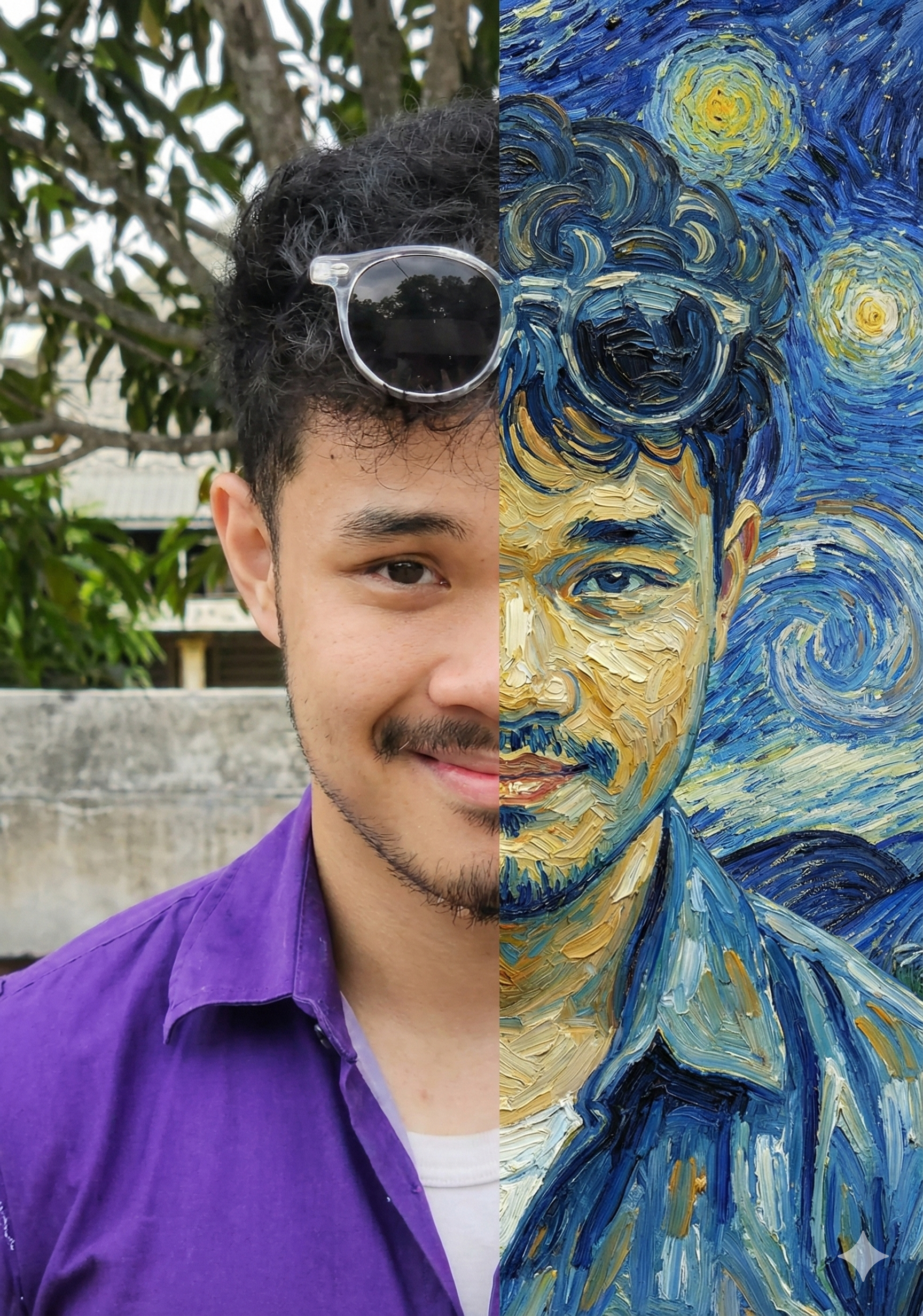
Far from decaying, art is entering a “hybrid” era where technology makes the creative world better by expanding the definition of what is possible. History shows that art survives technology by adapting to it; photography did not kill painting, it freed painters from the need to be realistic, birthing Impressionism and Cubism. Similarly, AI and digital tools are pushing human artists toward more conceptual, emotional, and physical work that machines cannot replicate. We are seeing the rise of “Prompt Engineering” as a skill and “Post-Photography” as a genre, where the artist directs the AI like a film director directs a crew. This coexistence allows for a new tier of creativity where the human provides the intent and the machine provides the execution, enabling projects of a scale and complexity that were previously impossible for a single individual to achieve.
4. The Data: A Booming Market with Valid Fears
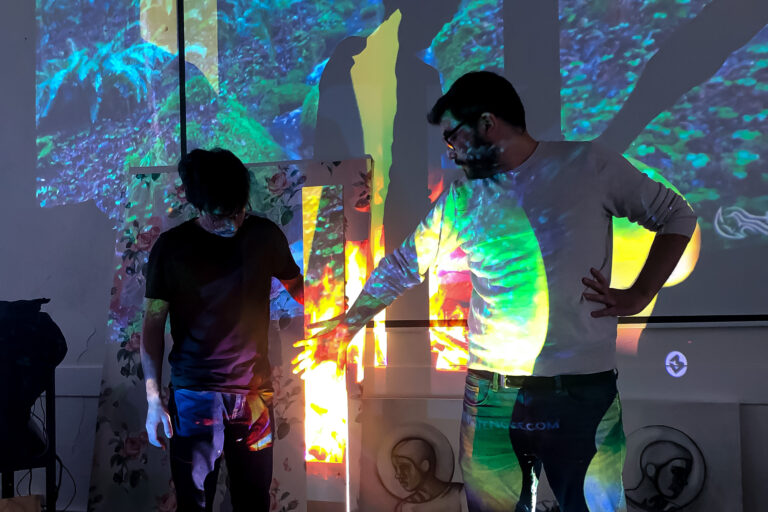
The proof that technology is reshaping rather than destroying the art world is found in both market growth and adoption rates. The global AI image generator market was valued at $349.6 million in 2023 and is projected to reach $1.08 billion by 2030, proving that this is a tangible, expanding industry, not a fleeting trend. Furthermore, a 2024 study showed that 87% of creative professionals have already integrated AI tools into their workflows, suggesting high-level coexistence. However, the fear of “decay” is also backed by data: 55% of artists believe AI will negatively impact their income, and 89% fear that current copyright laws are outdated. The sale of the AI-generated Portrait of Edmond de Belamy for $432,500 in 2018 signaled that the high-end art market accepts these works, but the legal and ethical friction remains the defining challenge of this decade.
Comments :