



Smart Recovery Wearables: The 24/7 Health Coach
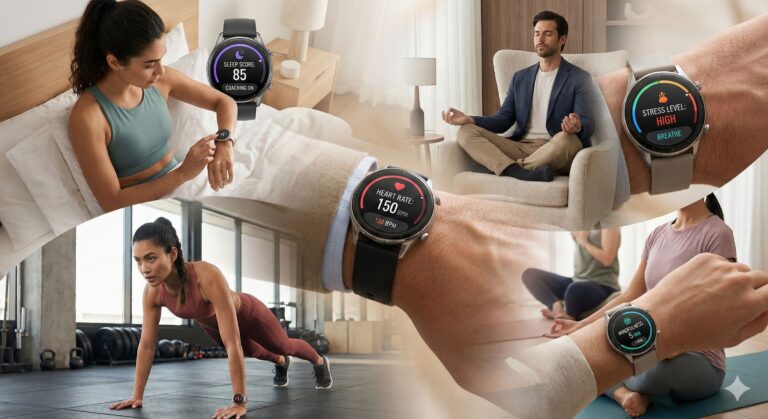
Smart recovery wearables created a new market category with the launch of the Whoop 1.0 strap in 2015, followed closely by the Oura Ring. Unlike traditional fitness trackers (like early Fitbits) that focused on step counting, these devices focused on the other 23 hours of the day: sleep and recovery. They introduced the general public to clinical-grade metrics like Heart Rate Variability (HRV), which was previously only monitored in hospital settings or elite sports labs.
The main problem these devices solve is the “no pain, no gain” fallacy and the lack of visibility into internal stress. Many fitness enthusiasts overtrain, believing that more gym time always equals better results, which eventually leads to burnout, illness, or injury. People generally have poor self-awareness regarding how alcohol, late meals, or stress affect their body’s ability to perform the next day. They were driving their bodies without a dashboard.
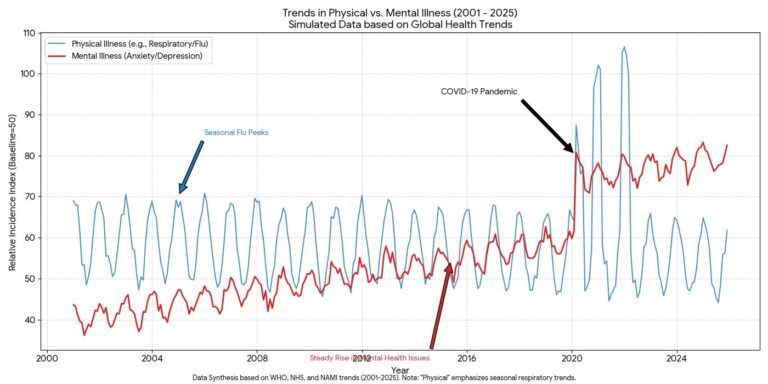 Based on epidemiological trends from the last two decades (2001–2025), I have generated a graph visualizing the relationship between physical and mental illness over time.
Visual Analytics: The “Twin Pandemics”
The graph above highlights two distinct patterns that define 21st-century health data:
-
The “Sawtooth” of Physical Illness (Blue Line):
-
Seasonality: You can see the consistent, sharp peaks every winter (January/February). This represents the “Winter Burden” of respiratory diseases (Influenza, Pneumonia) which dominates physical admission statistics.
-
The COVID-19 Shock: The massive disruption in 2020–2022 breaks the rhythm, showing the historic spikes in infection rates that overwhelmed systems globally.
-
-
The “Silent Rise” of Mental Illness (Red Line):
-
The Upward Drift: Unlike physical illness, which returns to baseline each summer, mental illness shows a steady, compounding increase throughout the century. Incidence rates for anxiety and depression have risen significantly, particularly among youth (16–24 years), where rates have nearly doubled since 2000.
-
The 2020 Step-Change: The graph shows a permanent “step up” starting in March 2020. The pandemic didn’t just cause a temporary spike; it reset the baseline. Referrals for mental health services jumped by ~38% post-2020 and have not returned to pre-pandemic levels.
-
Subtle Seasonality: Notice the smaller waves in the red line. This reflects Seasonal Affective Disorder (SAD), where mood disorders consistently worsen in winter (affecting ~5% of adults significantly and ~40% mildly) due to reduced sunlight and biological clock disruption.
-
Engineering Note: From a data perspective, physical illness behaves like a sine wave (predictable, cyclic), while mental illness behaves like a linear trend with step functions (cumulative, event-driven). This makes predicting resource allocation for mental health far more difficult than for flu season.
Recovery wearables make the fitness world better by quantifying “Strain” versus “Recovery.” The device acts as a daily coach: if your HRV is low and your sleep was fragmented, the app advises a rest day or light yoga, even if you planned a heavy workout. Conversely, a high recovery score gives you the green light to push for a personal best. This optimizes long-term performance by ensuring high-intensity training only happens when the body is physiologically ready to absorb it.

Comments :