


Researchers Explore Human Memory Using AI, Virtual Reality, and NVIDIA RTX Technology
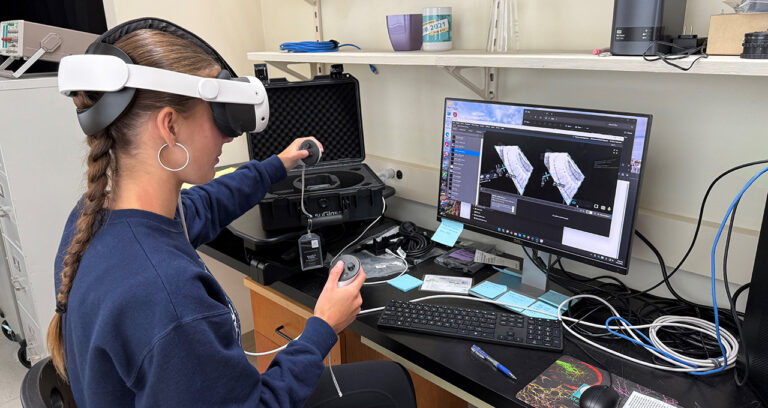
Advancements in artificial intelligence (AI) and immersive technologies are opening new opportunities in neuroscience research. Scientists at the Marine Biological Laboratory (MBL) in Massachusetts are leveraging AI, virtual reality (VR), and high-performance computing powered by NVIDIA RTX GPUs to study how human memory works at the molecular level. The project aims to provide deeper insights into how memories are formed and stored in the brain, potentially contributing to breakthroughs in neurological research.
Understanding Memory at the Molecular Level
Memory plays a fundamental role in human cognition and behavior. Researchers at MBL are focusing on understanding the biological mechanisms behind long-term memory formation. Their work investigates how experiences create physical and chemical changes in the brain that allow information to be stored and retrieved over time.
By analyzing these molecular processes, scientists hope to uncover how memory functions normally and how it may be affected by neurological disorders. The research could contribute to better understanding of diseases related to memory loss and cognitive decline, such as Alzheimer’s and other neurodegenerative conditions.
AI and Virtual Reality Transform Neuroscience Research
To support this complex research, MBL uses advanced AI tools combined with VR technology. Virtual reality allows researchers to visualize biological structures and processes in immersive 3D environments, making it easier to analyze complex neural systems.
AI helps process massive datasets generated from biological experiments, enabling scientists to identify patterns and simulate biological interactions more efficiently. This combination of AI and VR provides researchers with new ways to explore and model memory formation that would be difficult using traditional laboratory methods.
NVIDIA RTX Accelerates Scientific Discovery
The project relies heavily on NVIDIA RTX GPU technology and high-performance workstations to power simulations and AI-driven analysis. RTX technology supports advanced neural rendering and AI workflows, allowing researchers to generate realistic visual models and accelerate computational tasks.
Using GPU-accelerated computing enables researchers to process large-scale biological data faster and perform simulations that replicate real-world biological interactions. This significantly improves research efficiency and allows scientists to test hypotheses more effectively before conducting physical experiments.
Expanding the Future of Brain Research
The integration of AI, VR, and high-performance computing demonstrates how interdisciplinary technology can accelerate scientific discovery. The MBL project highlights the growing role of AI-driven visualization and simulation in understanding complex biological systems.
Researchers believe that combining immersive technologies with AI-powered analytics will enable deeper exploration of brain function and memory processes. These advancements could eventually support the development of new medical treatments, cognitive therapies, and educational tools based on improved understanding of how human memory operates.
A New Era of Technology-Driven Neuroscience
The collaboration between neuroscience researchers and technology providers reflects a broader trend of using AI to address complex scientific challenges. As computing power and AI capabilities continue to evolve, projects like MBL’s research initiative demonstrate how emerging technologies can help scientists unlock new knowledge about the human brain and cognitive function.
Source: https://blogs.nvidia.com/blog/mbl-human-memory-ai-vr-rtx/
Comments :