



The Trillionaire’s Paradox: Why Elon Musk Wants to “Kill Money”
Billionaire entrepreneur Elon Musk is no stranger to bold statements, but his recent remarks about wanting to “kill money” have sparked widespread curiosity and debate. While the phrase may sound radical or even utopian, Musk’s vision reveals deeper questions about the future of value creation, digital economics, and the role of currency in highly automated societies.
What Does “Kill Money” Really Mean?
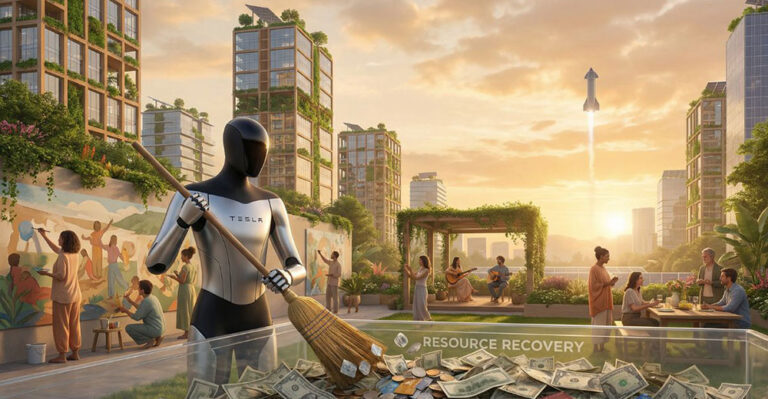
When Musk talks about wanting to “kill money,” he’s not advocating for abolishing all forms of currency tomorrow. Instead, he’s referring to a broader shift in how society defines value in an era of massive automation, artificial intelligence (AI), and abundant production.
In Musk’s view, if technological progress continues to accelerate — with factories, software, and even services becoming highly automated — the traditional role of money as a limited exchange medium could diminish. In such a world, production becomes so efficient and cheap that scarcity — the underlying reason money exists — loses relevance.
Essentially, “killing money” means moving toward a system where basic needs and services may no longer require conventional economic exchange because they can be produced in abundance at near-zero marginal cost.
The Paradox of Abundance and Value
Economists have long debated the role of scarcity in defining value. Traditional economic theory suggests that value is tied to how rare or costly something is to produce. If technology renders production almost free, then the conventional monetary system — built around pricing scarcity — may struggle to function.
Musk’s comments touch on this paradox: as automation and AI drive costs toward zero, the value of labor and even capital could shift dramatically. Instead of trading money for goods, opportunities may arise to redefine value through access, contribution, or reputation in digital and decentralized systems.
Why This Matters for the Future of Work
A world where money loses its central function would have profound implications for employment, productivity, and inequality. If machines can handle most production tasks, humans may no longer compete in traditional labor markets — forcing societies to rethink how resources, opportunity, and livelihood are distributed.
Proponents of ideas like universal basic income (UBI) argue that society may need new mechanisms to support people as automation reduces demand for human labor. Musk’s vision indirectly challenges policymakers, economists, and business leaders to consider whether current economic models are equipped for such dramatic technological change.
Technology’s Role in Shaping Post-Monetary Systems
Advances in AI, robotics, renewable energy, and decentralized networks (such as blockchain) all feed into the narrative of abundance. These technologies have the potential to dramatically lower the cost of goods, services, and information — and they challenge traditional monopolies on production and distribution.
However, critics warn that technology alone cannot guarantee equitable outcomes. Without intentional policy frameworks, wealth and power could continue to concentrate among those who control automation infrastructure — undermining the egalitarian ideals behind Musk’s provoking language.
The Broader Debate: Utopia or Risk?
Musk’s idea of “killing money” forces a philosophical discussion about the future of human society. Is it possible to build an economy where scarcity is minimized and basic needs are guaranteed? Or does this risk devaluing human contribution and destabilizing social structures dependent on wage labor?
Economists, technologists, and futurists remain divided. Some see Musk’s remarks as visionary — a provocative way to spark debate about how societies can adapt to unprecedented productive capacity. Others argue it overlooks crucial socioeconomic realities, such as human desires for purpose, community, and economic security.
Conclusion: A Provocation With Purpose
Whether one interprets Musk’s goal literally, metaphorically, or hyperbolically, the discussion highlights important questions about the future of money, work, and societal value. As automation and AI continue reshaping economies, the way we define and use money may evolve — but the transition will be far from simple or certain.
Musk’s provocative statement serves as a catalyst for broader conversations about how humanity navigates technological progress while ensuring equitable well-being and opportunity in the years ahead.
Source: https://www.technewsworld.com/story/the-trillionaires-paradox-why-elon-musk-wants-to-kill-money-180138.html
Comments :