



From Pigeons to Bloomberg: A Journey Through the Evolution of Financial Information Tools
Early Days and the Birth of the Bloomberg Terminal
In the early 1990s, Michael Bloomberg, a former Wall Street trader, recognized the inefficiencies in existing financial information systems. He envisioned a tool that could provide traders with real-time, accurate, and comprehensive financial data. In 1981, Bloomberg founded the company that would later become Bloomberg L.P., with the goal of developing a system that could revolutionize the financial industry.
Technical Innovations and the Terminal’s Design
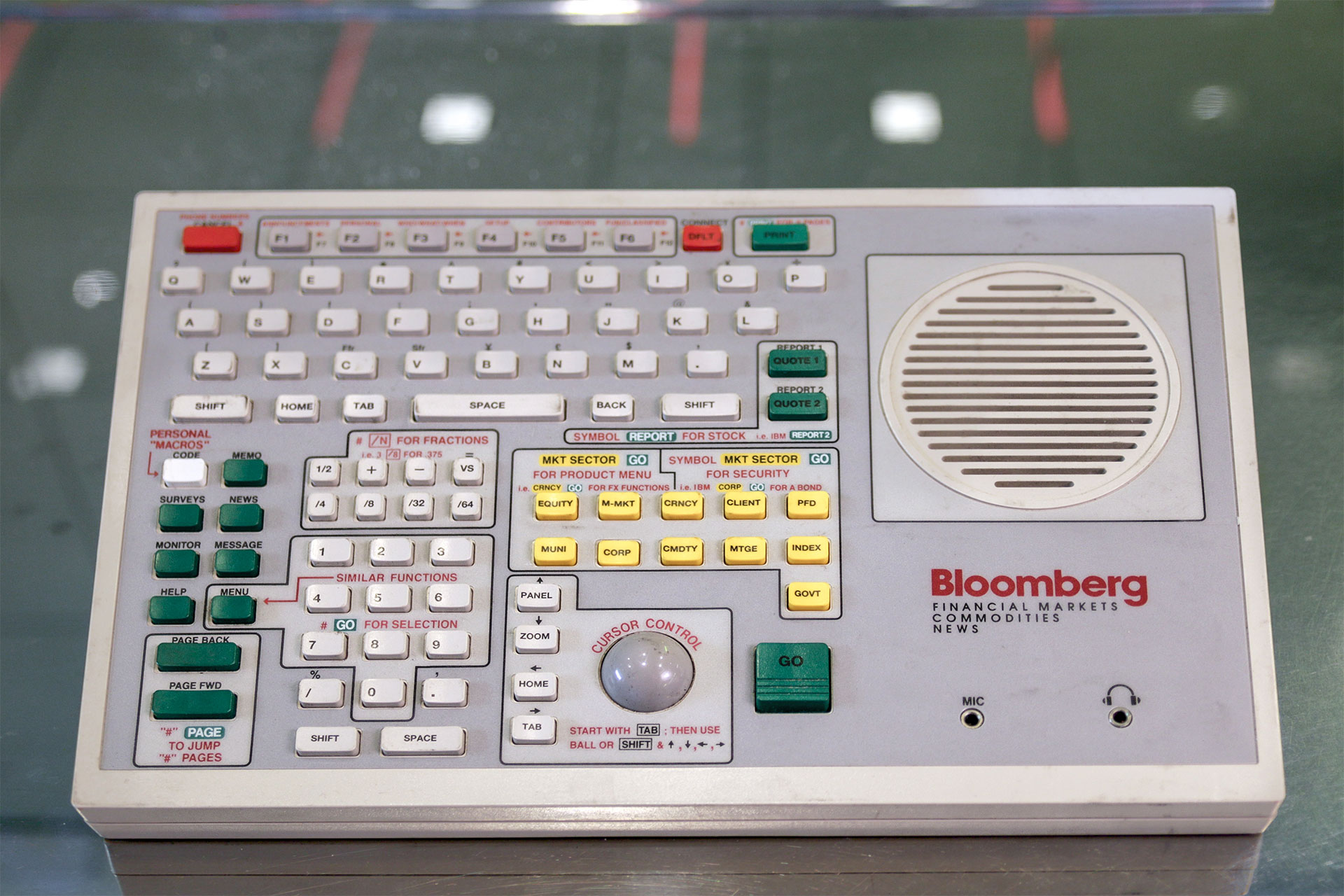
The Bloomberg Terminal first appeared in 1990, equipped with a novel keyboard design that included a trackball, speaker, and ports for headphones and microphones. This design was groundbreaking for integrating audio and visual feedback directly into the terminal. The keyboard was carefully crafted to enhance the speed and precision required by financial traders, who needed to swiftly process large volumes of data.
The core of the Bloomberg Terminal lies in its software, which has seen significant advancements over the years. It is built on a microcontroller architecture that supports seamless integration with diverse financial instruments and data sources. The terminal’s software is primarily written in C and C++, making it highly efficient and capable of handling real-time data streams. Understanding microcontroller architecture, computer engineering, and programming languages like C and C++ is essential for computer engineering students, as these form the basis of such sophisticated systems.
The Impact on Digital Systems and Networking
The development and implementation of the Bloomberg Terminal had a significant impact on the field of digital systems and networking. The terminal’s ability to process and transmit large volumes of data in real-time necessitated advanced networking technologies. Bloomberg’s systems were among the first to utilize high-speed fiber-optic networks, which greatly reduced latency and enhanced data accuracy. This technology has since been adopted by many financial institutions, influencing the design and implementation of networking protocols and systems.
The terminal’s software also presented new challenges and opportunities in digital systems. The need for real-time data processing and high-speed communication spurred the development of more sophisticated algorithms and data structures. These innovations have since been applied in various fields, including cybersecurity, cloud computing, and IoT (Internet of Things) systems.
Conclusion: A Pathway for Computer Engineering Students
The Bloomberg Terminal serves as a prime example of how computer engineering principles can be applied to solve real-world problems. By studying the terminal’s design and functionality, computer engineering students can gain valuable insights into the integration of microcontrollers, computer architecture, networking, and programming. The terminal’s evolution also underscores the importance of continuous innovation and adaptation in the rapidly changing landscape of financial technology.
Source: https://spectrum.ieee.org/bloomberg-terminal
Comments :