


2026: The Year Humanoid Robots Got Real
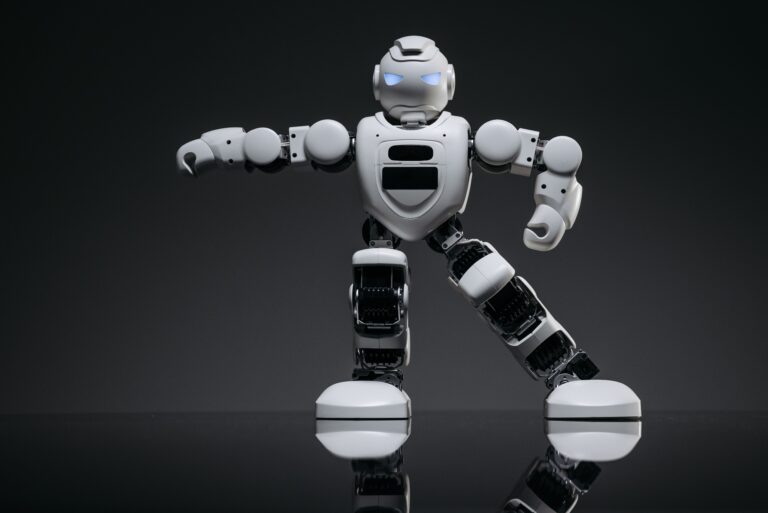
A year ago, most humanoid robots were still wobbly demo machines that needed careful handling on stage. In 2026, they’re doing kung fu on national TV, running half-marathons faster than any human, and working real shifts in car factories. Robots shaped like people are quickly moving from science fiction into everyday news.
Of course, not every promise has come true yet, and the gap between flashy videos and real work is still large. But the progress this year has been hard to ignore. Here’s what happened, how these robots actually work, and why this is one of the most exciting fields a future computer engineer can get into.
What’s Happening in 2026
The year started with a show. At China’s Spring Festival Gala in February, broadcast by state TV, Unitree Robotics’ humanoids performed martial arts and somersaults alongside human performers. Just a year earlier, its robots had shown only basic movements at the same event. Unitree shipped about 5,500 humanoids in 2025 and aims to ship 10,000–20,000 in 2026, according to the South China Morning Post.
Then came the race. On April 19, 2026, more than 100 humanoid robots joined the Beijing E-Town half-marathon. The winner, built by smartphone maker Honor, finished the 21.1 km course in 50 minutes and 26 seconds, faster than the human world record. In the first edition in 2025, the fastest robot needed about 2 hours and 40 minutes.
The more important story is happening in factories. At BMW’s plant in Spartanburg, USA, Figure AI’s Figure 02 robot completed an eleven-month pilot, logging more than 1,250 operating hours and loading over 90,000 sheet metal parts with 99% accuracy. Agility Robotics’ Digit robots have logged over 65,000 operating hours across nine customer sites, including logistics company GXO and Toyota’s plant in Canada. Not every company is moving that fast, though: Tesla’s Optimus program produced only “a few hundred” units in 2025, far below its earlier target, according to Humanoid Guide.
The Tech Behind It: How a Humanoid Robot Works
You can think of a humanoid robot as three systems working together. The first is sensing: cameras, depth sensors, microphones, and sensors inside the joints tell the robot what’s around it and how its own body is positioned. The second is actuation: electric motors and gearboxes in each joint, called actuators, move the arms, legs, and fingers with the right amount of force.
The third is the brain, and it actually has two layers. A fast, low-level control system runs many times per second to keep the robot balanced, adjusting every joint so it doesn’t fall over while walking, running, or lifting something. On top of that, AI models handle higher-level tasks such as recognizing objects, understanding instructions, and planning a sequence of actions.
Making all of this work inside one machine is the hard part. The robot runs on a battery, so every chip and motor has to be energy-efficient. The software has to react in real time, because a delay of even a fraction of a second can mean a fall. That’s why humanoid robots are built from embedded computers, real-time control software, and edge AI chips all working together.
What It Means for Future Engineers
Humanoid robotics is one of the clearest examples of why hardware and software can’t be separated. Building a robot like Figure 02 or Digit needs people who design circuit boards and motor drivers, people who write firmware for sensors and actuators, people who build control algorithms, and people who train the AI that decides what the robot does next.
The experts are also honest about what’s still missing. As some pointed out after the Beijing race, running fast doesn’t automatically make a robot useful in a factory or a home, where it needs fine finger control, reliable perception, and the ability to handle surprises. Solving those problems will take a new generation of engineers.
You can start exploring robotics early. Beginner kits with microcontrollers, servo motors, and simple sensors let you build small walking or line-following robots and learn the same basic ideas, sensing, control, and actuation, that power the humanoids in the news.
Key Takeaways
In 2026, humanoid robots performed kung fu on national TV, beat the human half-marathon record in Beijing, and logged thousands of working hours in real factories such as BMW’s Spartanburg plant. Unitree aims to ship up to 20,000 humanoids this year, while other companies are still catching up to their promises. Behind every robot are engineers who combine sensors, motors, embedded systems, and AI into one working machine.
Dreaming of building robots that walk, work, and think? The Computer Engineering program at BINUS University gives you the foundation in embedded systems, control, and AI that robotics needs. Explore the program and start building the machines of the future.
Sources:
- Kung fu, somersaults and scale: Unitree eyes 20,000-robot output in 2026 after gala, South China Morning Post, February 2026
- Humanoid robots outrun everyone in Beijing half-marathon, beats world-record time, FOX 9, April 2026
- Humanoid deployments in 2026 favor Figure and Agility, Humanoid Guide, 19 July 2026 (updated 21 September 2026)
- The machines are running, fighting, and herding pigs: 2026 is the year robots got real, iTWire, 23 April 2026
Comments :