


RISC-V Goes Mainstream: The Open Chip Design Changing Computing
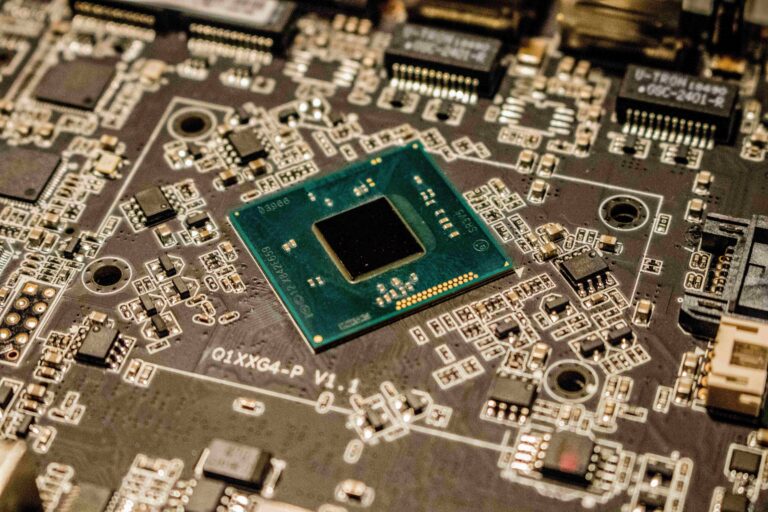
Most processors in the world speak one of two “languages”: x86, used by Intel and AMD, or Arm, found in nearly every smartphone. Both are owned by companies, and anyone who wants to build chips with them has to follow their rules and usually pay license fees. But a third option has been growing quietly for years, and in 2026 it’s stepping into the spotlight. It’s called RISC-V.
RISC-V (pronounced “risk-five”) is an open standard. Anyone can use it to design a processor without paying royalties. This year, it reached some big milestones, from full support in a major Linux release to a growing role in AI and data centers. Here’s what’s happening, what makes RISC-V special, and why it’s a great time for future computer engineers to learn about it.
What’s Happening
On April 23, 2026, Canonical released Ubuntu 26.04 LTS, one of the world’s most popular Linux operating systems. It is the first long-term support version of Ubuntu to fully support RVA23, a standard profile that defines which features a modern RISC-V processor must have, including security features, virtualization support, and vector instructions for AI. Earlier in the year, Canonical said RISC-V would move “from adoption to scale” in 2026, especially in cloud and edge computing.
Hardware is catching up too. Chinese chipmaker SpacemiT’s K3, an 8-core RVA23 processor running at up to 2.4 GHz, offers up to 60 TOPS of AI performance and was set to run Ubuntu 26.04. Developer boards and even a RISC-V mainboard for the Framework Laptop 13 are already supported.
The RISC-V community is aiming high. At RISC-V Summit Europe 2026 in Bologna, Andrea Gallo, CEO of RISC-V International, declared that “RISC-V is now,” with data centers, edge AI, and space among the target markets. One analysis by SHD Group, cited by Design & Reuse, suggests RISC-V could reach 33.7% market share across hardware segments by 2031. Still, Canonical itself notes that mainstream phones, tablets, and laptops won’t switch to RISC-V in the next few years.
The Tech Behind It: What Is an Instruction Set?
Every processor understands a fixed set of basic commands, like “add these two numbers,” “load this value from memory,” or “jump to another part of the program.” This list of commands is called the instruction set architecture, or ISA. It’s the contract between hardware and software: compilers turn your code into these instructions, and the chip is designed to execute them.
x86 and Arm are proprietary ISAs. RISC-V is different because its specification is open and free to use. Companies, universities, and even students can design their own RISC-V processors and add custom instructions for special tasks, such as AI or signal processing. RISC stands for “reduced instruction set computer,” a design philosophy that favors a small set of simple, fast instructions.
Openness has a challenge, though: if everyone adds different features, software can’t run everywhere. That’s why profiles like RVA23 matter. They define a common baseline, so an operating system like Ubuntu knows exactly which features it can rely on across many different RISC-V chips.
What It Means for Future Engineers
RISC-V is one of the best things to happen to computer engineering education. Because the specification is open, students can study a real, modern processor architecture in full detail, simulate it, and even build their own RISC-V core on an FPGA. That kind of hands-on learning used to be much harder with closed architectures.
It’s also a practical career skill. Countries and companies interested in building their own chips find RISC-V attractive because it avoids license fees and lets them customize designs. For a country like Indonesia, which is building up its chip design capabilities, open architectures can lower the barrier to entry.
Engineers who understand RISC-V can work across the stack: designing processor cores, writing compilers and operating system support, building firmware for embedded devices, or optimizing AI software to run on new chips. As RISC-V spreads from tiny microcontrollers to data centers, those skills will be in demand.
Key Takeaways
RISC-V is an open, royalty-free instruction set that anyone can use to design processors. In 2026, Ubuntu 26.04 LTS became the first Ubuntu LTS to fully support the RVA23 standard, new chips like SpacemiT’s K3 brought up to 60 TOPS of AI performance, and RISC-V International declared that “RISC-V is now.” Mainstream laptops and phones aren’t switching yet, but RISC-V is growing fast in embedded systems, edge AI, and data centers.
Want to understand processors down to the instruction level, or even design your own? The Computer Engineering program at BINUS University covers computer architecture, digital design, and embedded systems. Explore the program and start building the chips of tomorrow.
Sources:
- Canonical releases Ubuntu 26.04 LTS Resolute Raccoon, Canonical, 23 April 2026
- RISC-V Linux will be ready for wide adoption in 2026, says Canonical, Yahoo Tech, 27 February 2026
- SpacemiT K3 with RVA23 to get Ubuntu 26.04 LTS, OMG! Ubuntu, February 2026
- RISC-V targets data centers, edge AI, space, Design & Reuse, 15 June 2026
Comments :