



Is a Microcontroller Technically an SoC? What’s the Real Difference
CPU vs. Microprocessor vs. Microcontroller vs. SoC: What’s the Real Difference ?
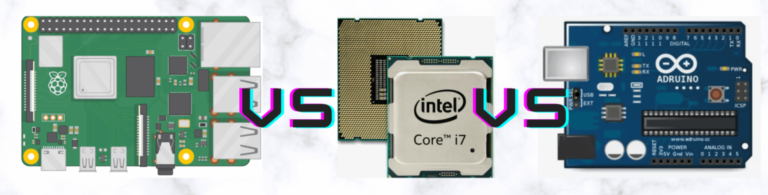
SBC VS CPU VS Microcontroller, https://www.seeedstudio.com/blog/2020/10/27/all-about-cpus-microprocessor-microcontroller-and-single-board-computer/
Untangling Nested Silicon Architectures: From Pure Execution Cores to Single-Chip Systems in Engineering Datasheets and Tech Marketing before we dive deeper, we need to know about CPU vs. Microprocessor vs. Microcontroller vs. SoC.
Four Words for the “Brain” of a Device
Walk through any tech store or electronics lab and you will hear four labels used for a device’s silicon brain. People call an Intel Core i7 a CPU, call an Arduino chip a Microcontroller, call a Raspberry Pi chip an SoC, and call older PC chips Microprocessors—yet Espressif and Nordic Semiconductor officially call their microcontrollers (ESP32, nRF52) “SoCs” on page one of their datasheets (Espressif Systems, 2024; Nordic Semiconductor, 2023).
The short answer is that these four terms represent concentric layers of hardware integration, much like Russian nesting dolls (Hennessy & Patterson, 2019). Moving from CPU → Microprocessor → Microcontroller → SoC simply wraps more supporting subsystems—memory, storage, wireless radios, and graphics—onto the exact same piece of silicon.
Step 1: Defining Each Term from the Inside Out (Nested Architecture)
1. CPU (Central Processing Unit — The Pure Math & Logic Engine)
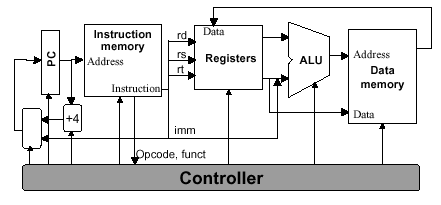
Schematic diagram of MIPS architecture, https://www.cise.ufl.edu/~mssz/CompOrg/CDA-proc.html
Strictly defined, the CPU (Central Processing Unit) is solely the core instruction-execution engine inside a chip (Hennessy & Patterson, 2019). It consists of the Arithmetic Logic Unit (ALU) for math and bitwise operations, the Control Unit (CU) for fetching and decoding instructions, ultra-fast Registers, and small L1/L2 caches. On its own, a bare CPU core cannot talk to sensors, screens, or USB ports without external bus interfaces and memory controllers.
2. Microprocessor (MPU — A Standalone CPU on a Chip)
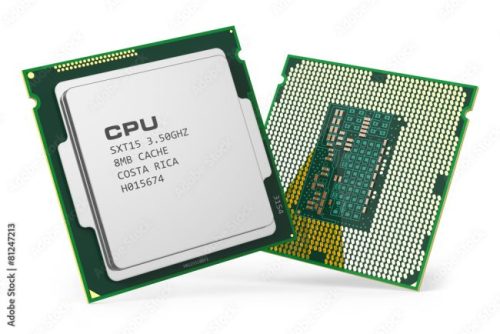
CPU , https://dte.telkomuniversity.ac.id/otak-di-balik-semua-perangkat-pintar-mengenal-cara-kerja-prosesor-cpu-yang-membuat-komputer-dan-hp-berfungsi-optimal/
A Microprocessor (MPU) packages one or more CPU cores (plus cache and high-speed bus interfaces) onto a single integrated circuit, but relies on separate external chips on a motherboard for main RAM, permanent storage, and I/O peripherals (Microchip Technology, 2023). Desktop Intel Core and AMD Ryzen processors—as well as embedded MPUs like the STM32MP1—require external DDR4/DDR5 RAM and SSD/eMMC flash chips to boot.
3. Microcontroller (MCU — A Self-Contained Control Computer on One Chip)
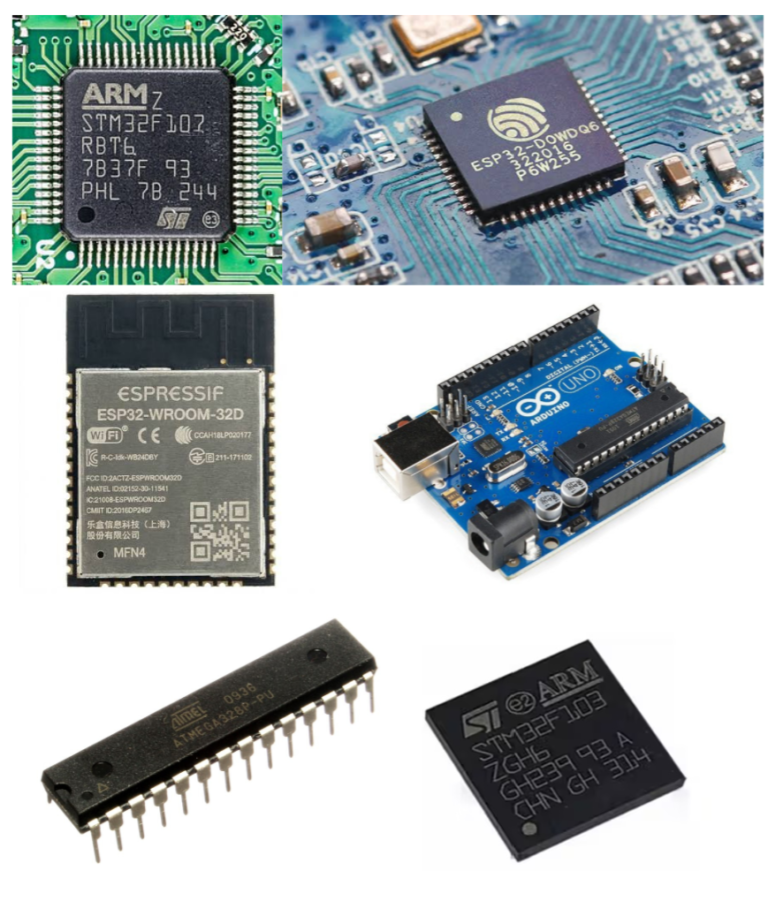
A Microcontroller (MCU) integrates the CPU core, internal SRAM, non-volatile Flash storage, clock oscillators, and hardware I/O peripherals onto one low-power chip (Mazidi et al., 2018; Microchip Technology, 2023). Built-in peripherals like GPIO, ADC, PWM timers, UART, SPI, and I2C allow chips such as the ATmega328P, STM32F103/H7, and ESP32 to read sensors and drive motors in real time without external RAM.
4. System-on-Chip (SoC — An Entire Electronic System on One Silicon Die)
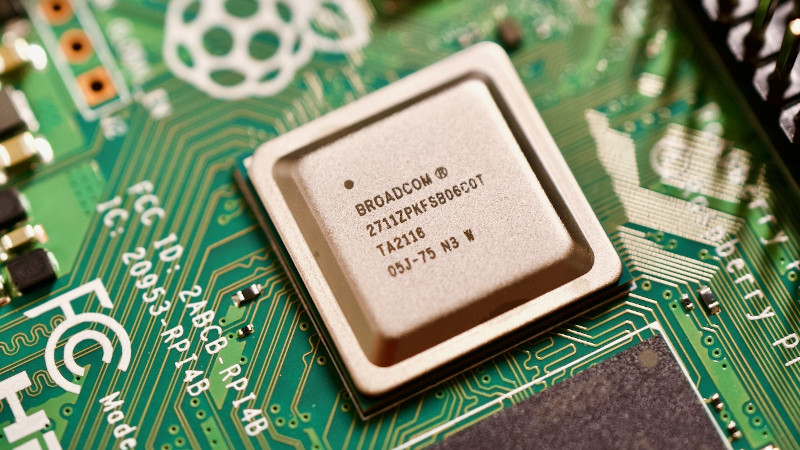
BCM2711 on Rasberry pi 4, https://hackaday.com/2021/09/30/whats-in-a-raspberry-pi-processor-update/
A System-on-Chip (SoC) shrinks virtually an entire computer motherboard onto a single silicon die or unified package (ARM, 2023; Hennessy & Patterson, 2019). Chips like the Apple M4 / A18, Qualcomm Snapdragon 8 Elite, and Broadcom BCM2712 (Raspberry Pi 5) combine multi-core application CPUs, GPU, NPU (AI engine), Image Signal Processor (ISP), LPDDR memory controllers, and wireless modems to run full operating systems like Android, iOS, macOS, or Linux.
Step 2: Can a Microcontroller Technically Be Called an SoC?
The Technical Engineering Answer: Yes
Strictly speaking, every microcontroller is technically a specialized, low-power System-on-Chip (ARM, 2023). Because an MCU integrates processing cores, volatile memory (SRAM), non-volatile storage (Flash), internal buses, and complete input/output peripherals onto a single substrate to operate as an autonomous system, it satisfies the literal engineering definition of an SoC.
Semiconductor datasheets prove this directly: Espressif Systems defines the ESP32-S3 as “a low-power MCU-based system on a chip (SoC) with integrated 2.4 GHz Wi-Fi and Bluetooth LE” (Espressif Systems, 2024). Similarly, Nordic Semiconductor officially markets its nRF52840 ARM Cortex-M4F microcontroller as a “Bluetooth 5.4 SoC” because RF transceivers, crypto engines, memory, and CPU share one die (Nordic Semiconductor, 2023).
Why Marketing and Everyday Tech Say “No”
Despite the overlap in vendor datasheets, consumer tech reviewers and PC builders separate MCU and SoC in everyday speech for two practical architectural reasons:
- Operating System & Memory Management Unit (MMU): In consumer tech marketing, “SoC” implies an Application Processor (AP) equipped with a hardware
MMUcapable of virtual memory and running Linux, Android, iOS, or Windows across gigabytes of DRAM (ARM, 2023). By contrast, “MCU” signals bare-metal C/C++ or real-time OS (FreeRTOS/Zephyr) firmware executing deterministically out of kilobytes or megabytes of on-chip Flash and SRAM. - Real-Time Hardware Control vs. Multimedia Compute: Industry usage reserves MCU for deterministic physical control—sampling ADCs, generating microsecond PWM pulses, and sleeping at microamp currents on coin cells—while reserving SoC for display-driving, camera-processing, multi-tasking consumer devices like smartphones, tablets, and single-board computers.
The Blurred Middle Ground
Modern crossover chips prove that MCU and SoC sit on a continuous spectrum rather than behind a rigid wall. Chips like the Espressif ESP32-S31 (320 MHz dual-core RISC-V, Wi-Fi 6, 2D graphics accelerator, and Gigabit Ethernet) and Raspberry Pi RP2350 pack rich multimedia and networking subsystems into microcontroller-class silicon.
Step 3: Master Side-by-Side Comparison Table
Use the comparison matrix below to distinguish CPU, Microprocessor (MPU), Microcontroller (MCU), and System-on-Chip (SoC) across internal hardware, memory needs, operating systems, power draw, and real-world devices (Hennessy & Patterson, 2019; Microchip Technology, 2023; ARM, 2023):
| Feature | CPU (Processing Core) | Microprocessor (MPU) | Microcontroller (MCU) | System-on-Chip (SoC) |
|---|---|---|---|---|
| What Is Inside the Chip? | ALU, Control Unit, Registers & L1/L2 Cache only | Multi-core CPU + Cache + High-speed Bus/DRAM controllers | CPU + On-chip SRAM + Flash + GPIO, ADC, PWM, UART/SPI/I2C | App CPUs + GPU + NPU + ISP + Modem + USB/PCIe + DRAM ctrl |
| Needs External RAM & Storage? | Yes (requires external bus & memory subsystem) | Yes (requires external DDR RAM sticks & SSD/eMMC/Flash) | No (self-contained with built-in Flash & SRAM) | Usually external/in-package LPDDR & UFS/NVMe/microSD |
| Typical Operating System | Executes instructions fed by host system | Full OS (Windows, macOS, Desktop/Server Linux) | None (Bare-Metal C/C++) or RTOS (FreeRTOS, Zephyr) | Full Rich OS (Android, iOS, macOS, Linux, Windows on ARM) |
| Power & Cost | Sub-block inside larger silicon | High power (15 W – 250 W+); $50 – $1,000+ | Ultra-low power (µA sleep – <1 W); $0.50 – $15 | Moderate-high power (2 W – 40 W); $15 – $300+ |
| Technical vs. Marketing Label | Core compute engine inside all three chip types | Standalone processor IC without integrated RAM/Flash | Technically a single-chip SoC; marketed as MCU | Marketed as SoC for high-integration app processors |
| Real-World Examples | ARM Cortex-M4 core, Intel Lion Cove core, RISC-V core | Intel Core i7, AMD Ryzen 9, STMicro STM32MP1 | ATmega328P, STM32F103, STM32H7, ESP32, nRF52840 | Apple M4 / A18, Snapdragon 8 Elite, Broadcom BCM2712 |
Step 4: Quick Practical Rule (Which Word Should You Use When?)
- Say “CPU” when referring strictly to the instruction-crunching cores inside any chip (for example, “the dual-core ARM Cortex-M33 CPU inside this chip”).
- Say “Microprocessor (MPU)” when discussing standalone PC/server chips (Intel Core, AMD Ryzen) or embedded Linux processors that require external RAM chips on the board.
- Say “Microcontroller (MCU)” when referring to single-chip control brains (ATmega328P, STM32, ESP32) running real-time firmware—while knowing that technically, it is a specialized System-on-Chip.
- Say “SoC” when talking about high-integration application processors (Apple M-series, Qualcomm Snapdragon, MediaTek Dimensity, Raspberry Pi chips) that combine CPU, GPU, NPU, and high-speed controllers to run a full OS.
Quick FAQ & Key Takeaways
- Can a microcontroller run Linux like a Raspberry Pi SoC? Standard MCUs lack a hardware Memory Management Unit (
MMU) and only have kilobytes of SRAM, so they run bare-metal code or an RTOS rather than standard desktop Linux. - Why does Espressif call the ESP32 both an MCU and an SoC? Because the ESP32 executes microcontroller-style real-time firmware from internal Flash/SRAM while integrating full 2.4 GHz Wi-Fi and Bluetooth RF transceivers on the same silicon die (Espressif Systems, 2024).
- Does every SoC contain a CPU? Yes—the CPU is the innermost core inside every Microprocessor, Microcontroller, and System-on-Chip.
References
- ARM Ltd. (2023). Cortex-M vs. Cortex-A: Embedded microcontrollers (MCUs) versus application processors (SoCs). ARM Developer Documentation. https://developer.arm.com/
- Espressif Systems. (2024). ESP32-S3 series datasheet: Low-power MCU-based system on a chip (SoC) with integrated 2.4 GHz Wi-Fi and Bluetooth LE. https://www.espressif.com/sites/default/files/documentation/esp32-s3_datasheet_en.pdf
- Hennessy, J. L., & Patterson, D. A. (2019). Computer architecture: A quantitative approach (6th ed., Chapter 1: Fundamentals of quantitative design and analysis & System-on-Chip integration). Morgan Kaufmann.
- Mazidi, M. A., Naimi, S., & Naimi, S. (2018). The AVR microcontroller and embedded systems: Using assembly and C (Chapter 1: Microcontrollers and embedded processors). Pearson.
- Microchip Technology. (2023). Microcontrollers (MCUs) vs. microprocessors (MPUs): Architectural differences, memory integration, and application selection. https://www.microchip.com/
- Nordic Semiconductor. (2023). nRF52840 product specification: Multiprotocol Bluetooth 5.4, Thread, and Zigbee SoC with ARM Cortex-M4F MCU core. https://infocenter.nordicsemi.com/
Comments :